Every summer, wildfire season puts Central Oregon homes at real risk. Lightning sparks fires. Wind drives them fast. And smoke can reach your property even when the flames don’t. Homes across Bend, Redmond, Sisters, Madras, and Prineville all face this threat.
At Central Oregon Disaster Restoration, we’ve helped neighbors recover from fire damage since 2006. The biggest lesson? Preparation saves everything.
This guide puts every key wildfire resource in one place: alert signups, evacuation maps, air quality tools, and what to do if fire or smoke hits your home.
How Do I Sign Up for Wildfire Alerts in Central Oregon?
The fastest way to get wildfire alerts is through your county’s alert system. In Deschutes County, it’s called Deschutes Alerts. You enter your address and pick how you want to hear from them: phone call, text, or email. When danger shows up near your address, you get a notice right away.
Sign up for your county’s alert system here:
You can also text COFIRE to 888-777 for wildfire and prescribed fire text alerts from Central Oregon Interagency Dispatch. Free, anonymous, and you can opt out any time.
Don’t wait until you see smoke. Evacuation levels can change in minutes, especially overnight. Getting that alert on your phone could be the difference between a calm departure and a panicked scramble.
Where Can I Find Current Evacuation Maps?
During an active wildfire, the most reliable evacuation maps for Central Oregon are maintained by county sheriff’s offices and updated in real time. Access them here: Central Oregon Fire Information evacuation maps.
For statewide wildfire updates, the Oregon State Fire Marshal’s wildfire information page tracks all active incidents and emergency declarations.
What Do Oregon’s Evacuation Levels Mean?
Oregon uses a three-level system. Understanding it before an emergency is critical.
These levels can jump from 1 to 3 fast. Wind shifts and spot fires can push a blaze miles in hours. If you’re at Level 1, act like Level 2 is next.
What Should I Pack in a Wildfire Go-Bag?
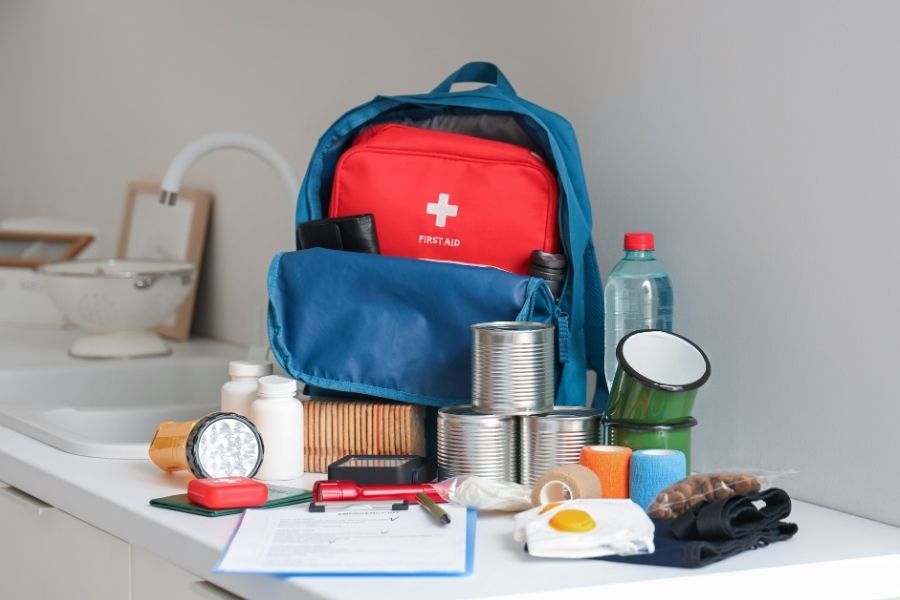
A go-bag is a single bag packed and ready by the door so you can leave in under five minutes. Tap each item as you pack it:
- Important documents in a waterproof bag (IDs, insurance policies, medical records)
- Medications and a basic first aid kit
- Phone chargers and a portable battery pack
- Change of clothes and sturdy shoes for each family member
- Cash in small bills (ATMs don’t work during power outages)
- Water bottles and non-perishable snacks
- Pet supplies: food, leash, carrier, medications
How Can I Protect My Home Before a Wildfire?
Clearing space around your home is one of the best things you can do before fire season. It won’t make your home fireproof, but it slows a fire’s path and gives crews a better shot at saving your property.
The Institute for Business and Home Safety (IBHS) says to keep grass cut and clear dry brush within 30 feet of your home. Trim tree branches back from your roof. Move firewood and propane tanks at least 30 feet away.
Clean your gutters and screen attic vents and crawl space openings with 1/8-inch metal mesh to block embers.
In Central Oregon, juniper, pine, and dry grass surround most homes. Embers can fly over a mile ahead of a fire front. Your home doesn’t need to be in the direct path of flames to catch fire.
What Should I Do If Smoke or Ash Impacts My Home?
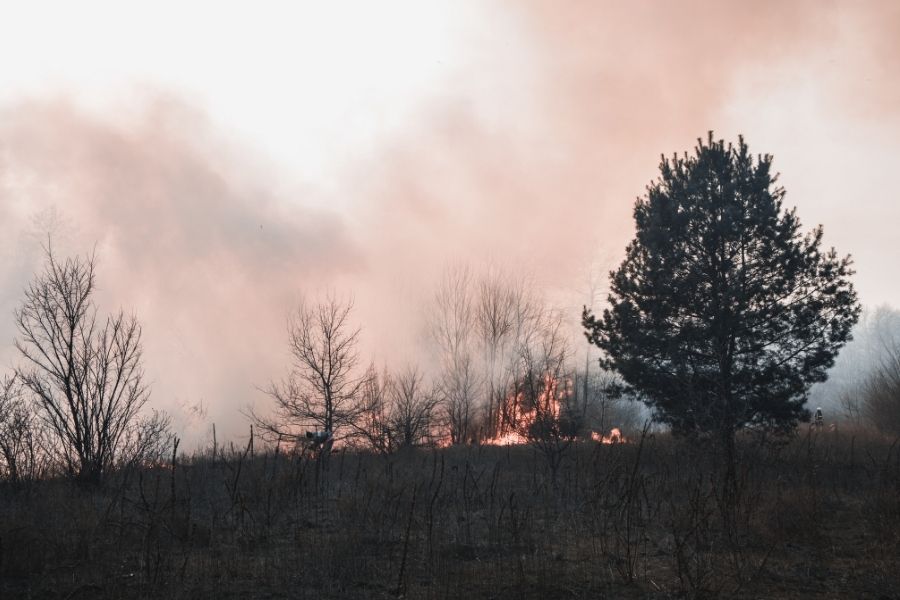
Even if your home wasn’t in an evacuation zone, wildfire smoke can still cause damage. Smoke particles are tiny. They slip through gaps around doors, windows, and HVAC systems and settle into carpet, curtains, and ductwork. If you smell smoke inside, particles have already made their way in.
Keep windows and doors shut during smoke events. Run your HVAC on recirculate with a MERV 13 or higher filter. Don’t wipe soot with regular cleaners. Soot is acidic, and the wrong product can stain surfaces for good.
Check air quality at fire.airnow.gov before opening windows again.
If the smoke smell sticks around after outdoor air clears up, the particles have likely settled deep into your home’s materials. The longer smoke damage sits, the harder it is to get out.
What Do I Do If Fire Damages My Home?
If your property takes fire damage, the first 24 to 48 hours matter most. We wrote a full guide on what to do after wildfire damages your home, but here are the key steps. Don’t go back inside until officials say it’s safe. Even after flames are out, you may find weak structures, hot spots, downed power lines, and bad air quality.
Call your insurance company right away. Take photos and video of every room and every damaged item before anything gets moved or cleaned.
You have the right to choose your own restoration company. Your insurer may suggest a preferred vendor, but the decision is always yours.
Fire and smoke cleanup takes tools most people don’t have: air scrubbers, thermal foggers, HEPA vacuums. Each handles a different type of residue. Our team responds 24/7 and is usually on site within 60 minutes. We handle the full process from board-up through rebuild, all in-house, and work with your insurance company directly.
Frequently Asked Questions
Can wildfire smoke damage my home even if the fire is miles away?
Yes. Wildfire smoke particles are small enough to enter your home through gaps around windows, doors, and your HVAC system. Once inside, they settle into carpet, furniture, curtains, and ductwork. Keeping doors and windows shut and running your HVAC on recirculate with a high-rated filter helps reduce exposure.
Does homeowners insurance cover wildfire damage in Oregon?
Most standard homeowners policies in Oregon cover fire damage, including wildfires. That usually means structural repairs, personal property loss, living costs while you’re displaced, and smoke damage. Check your policy to know your coverage limits and deductible.
How quickly should I call a restoration company after fire damage?
As soon as it’s safe to do so. Soot and smoke residue are acidic and begin causing permanent damage to surfaces within hours. The sooner a professional team begins cleanup, the more materials can typically be saved rather than replaced.
We’re here when Central Oregon needs us.
If fire or smoke impacts your home anywhere in Bend, Redmond, Sisters, Madras, Prineville, La Pine, Sunriver, or the surrounding area, our team is here around the clock. We’ve been doing this since 2006, and we’ll be here long after the smoke clears.
Reach out to our team any time, day or night.