

When a Roof Leak Turns Into a Two-Story Problem
A Bend homeowner called our team at Central Oregon Disaster Restoration after noticing water stains spreading across their dining room ceiling. What looked like a minor drip turned out to be a roof leak that had already worked its way through the upstairs bathroom, soaking through tile, drywall, and insulation before settling into the main level below. Our crew provided water damage restoration within the hour, arriving on-site to assess a situation that had quietly been getting worse for some time.
How Did the Damage Spread So Far?
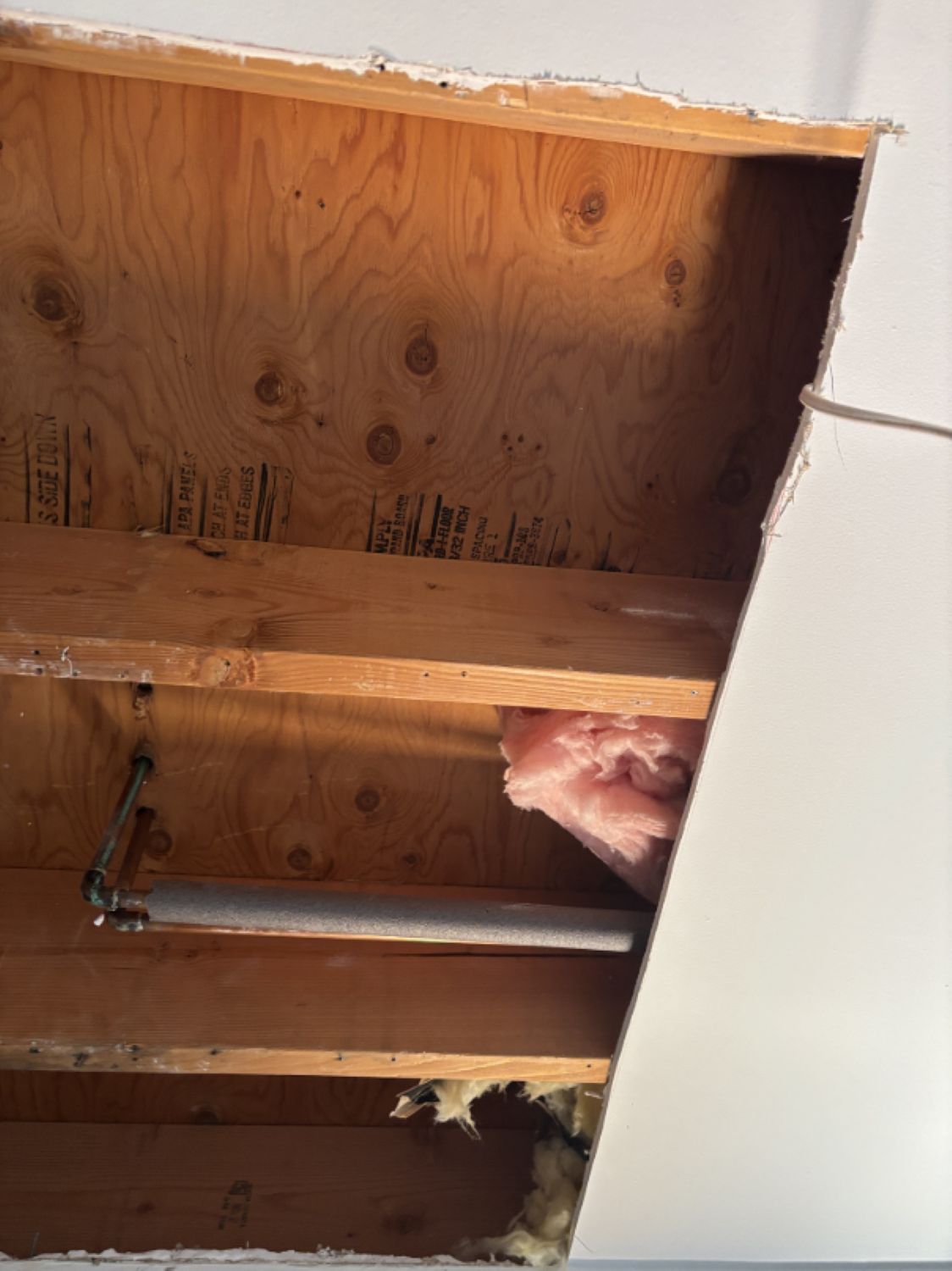
Roof leaks are sneaky. Water follows the path of least resistance. It travels along framing, wiring, and insulation long before it shows up on a visible surface. By the time this homeowner spotted ceiling stains in the dining room, water had already soaked through the upstairs bathroom floor and traveled down through the joist system.
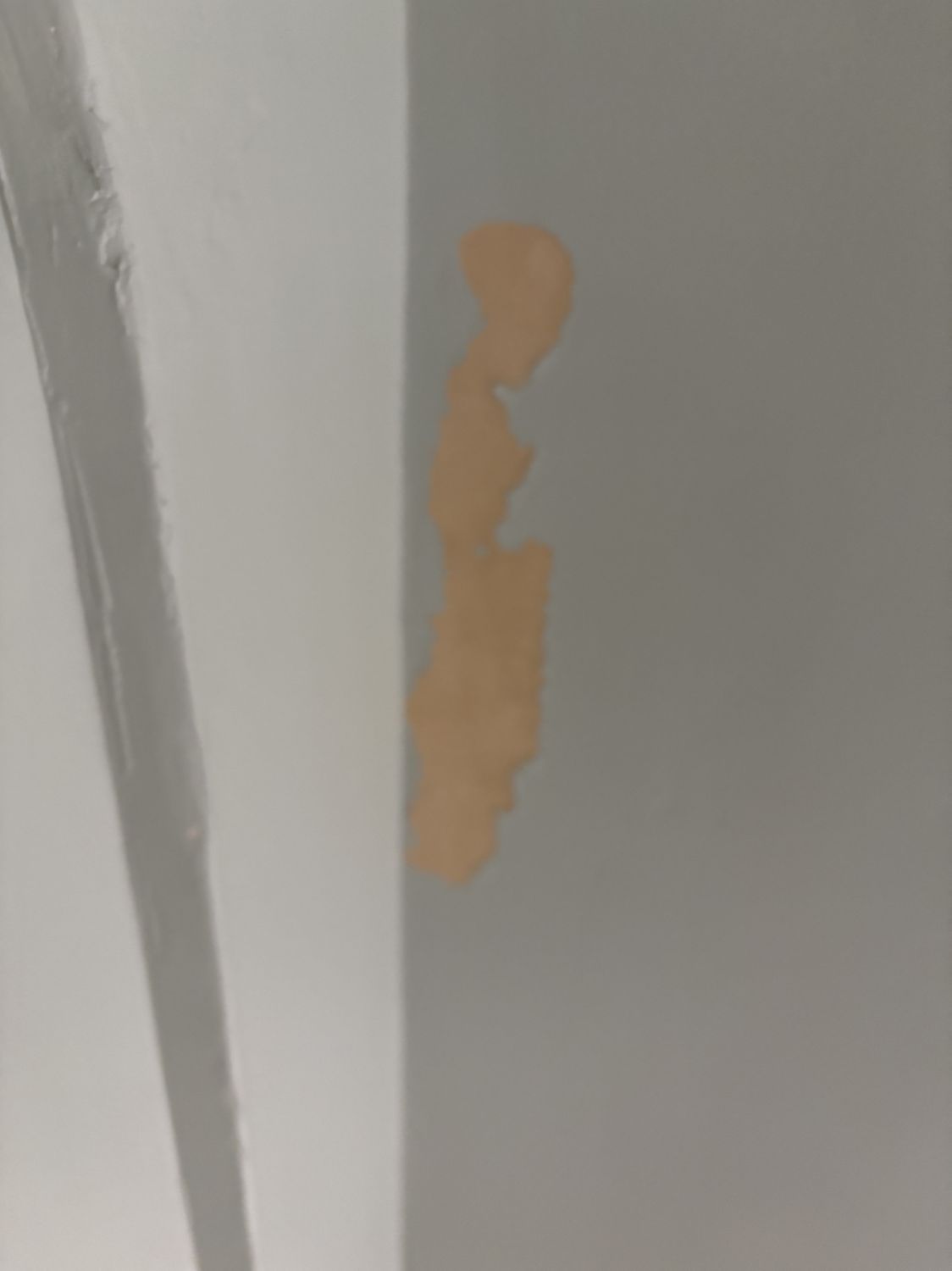
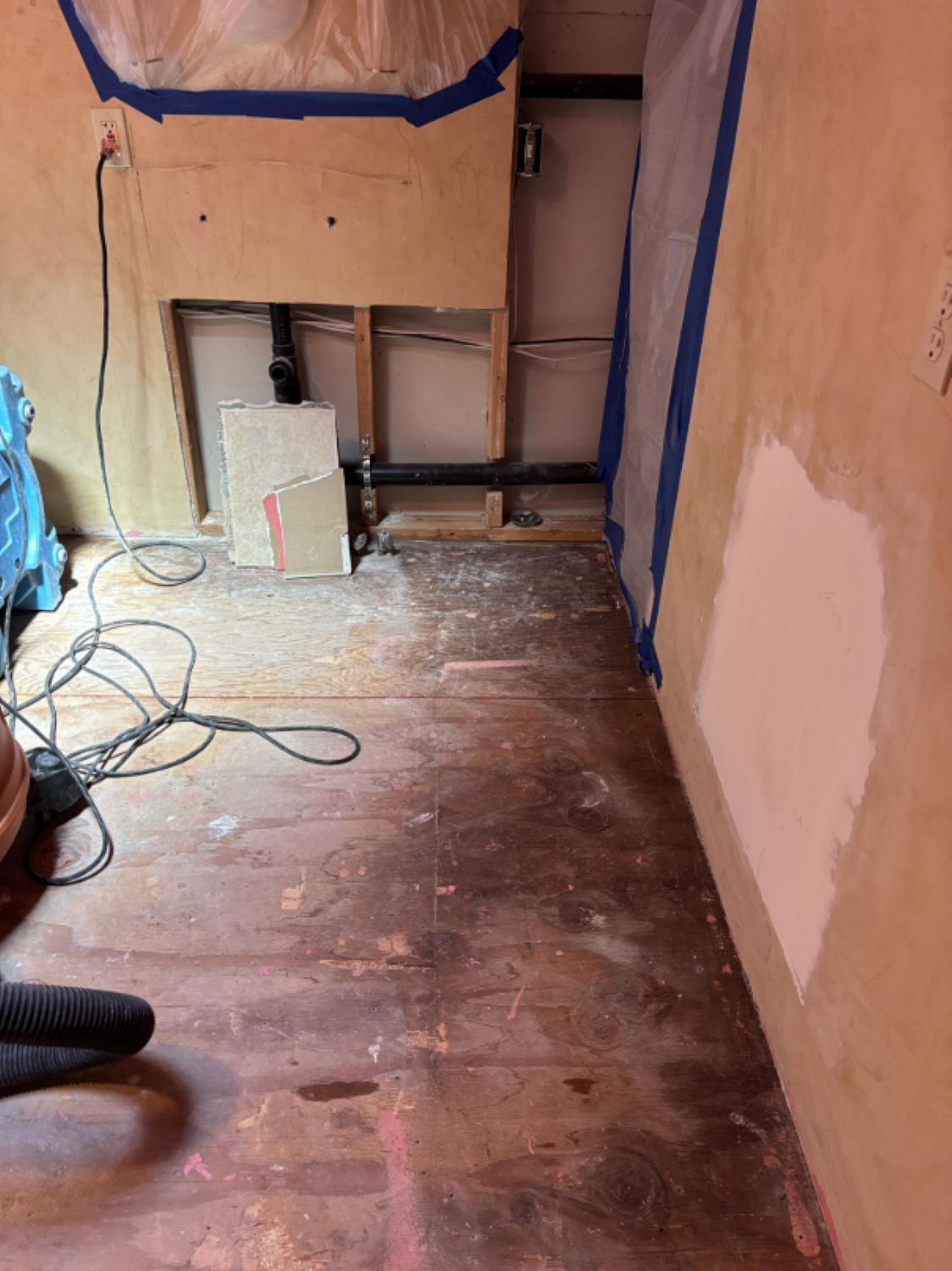
The upstairs bathroom took the worst of it. The ceramic tile floor was no longer salvageable, and the drywall and subfloor underneath had sustained significant water damage.
That’s not unusual. Water that sits in building materials causes them to weaken and break down quickly. The CDC recommends prompt cleanup and drying to prevent further structural damage. A leak that goes unnoticed for days or weeks can turn a small repair into a major restoration project.
What We Found During the Initial Inspection
Our two-person crew arrived on March 18, 2025 and documented the full extent of the damage across both floors. Here’s what the inspection revealed:
- Water-saturated insulation in the dining room ceiling (batt insulation, soaked through)
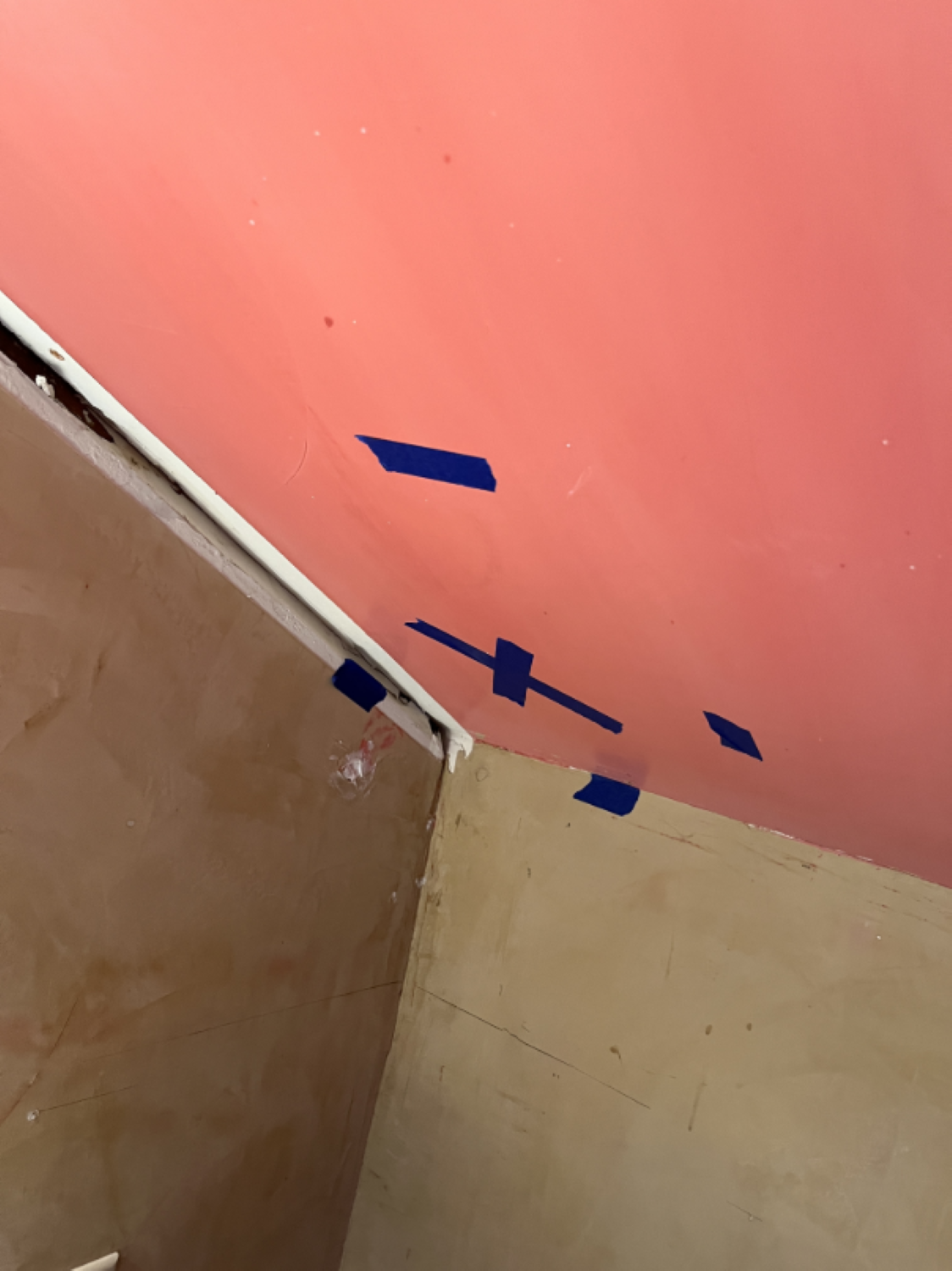
- 20 SF of damaged drywall on the dining room ceiling where water had pooled
- 71 SF of non-salvageable ceramic tile flooring in the upstairs bathroom
- Extensive water damage to bathroom drywall and subfloor from prolonged moisture exposure
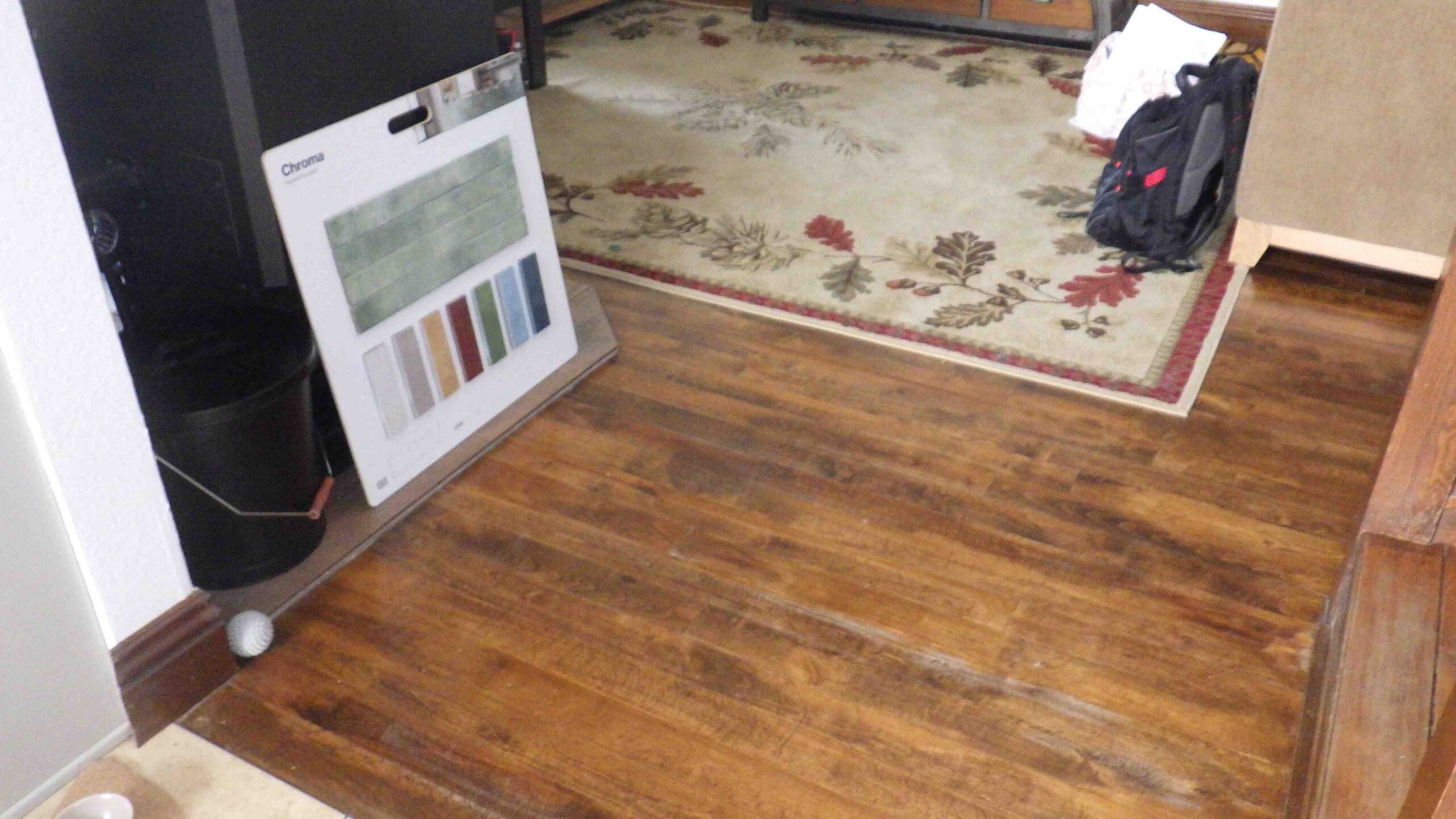
- Hardwood floors in the dining room at risk from moisture migrating downward
Before any demolition could begin, our certified technicians collected two asbestos samples. Oregon’s DEQ requires asbestos testing for all homes built before 2004. Skipping this step isn’t just risky, it’s against the law.
 |
 |
 |
How Did the Restoration Process Work?
This wasn’t a one-day job. Water that’s traveled through multiple floors requires a methodical approach, and our team followed IICRC S500 standards for water damage restoration from start to finish. The work unfolded over several weeks with regular monitoring to make sure everything dried properly.
Upstairs Bathroom: Full Tear-Out and Treatment
The bathroom needed the most aggressive work. We detached the toilet, pedestal sink, and all plumbing supply lines. Every exposed drain and pipe got capped and plugged.
Then the entire ceramic tile floor came out, along with the mortar bed underneath. That’s 71 square feet of flooring, gone.
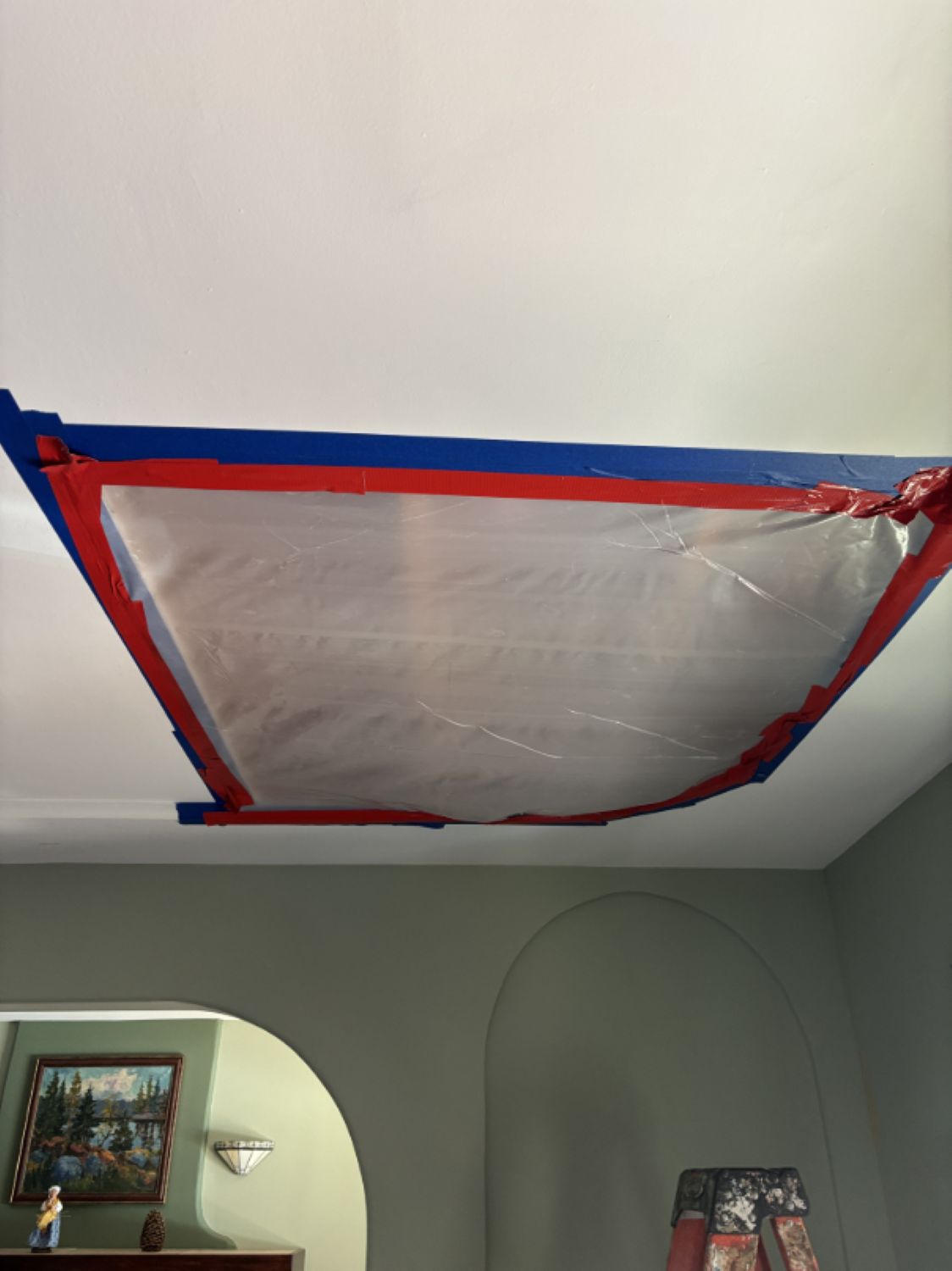
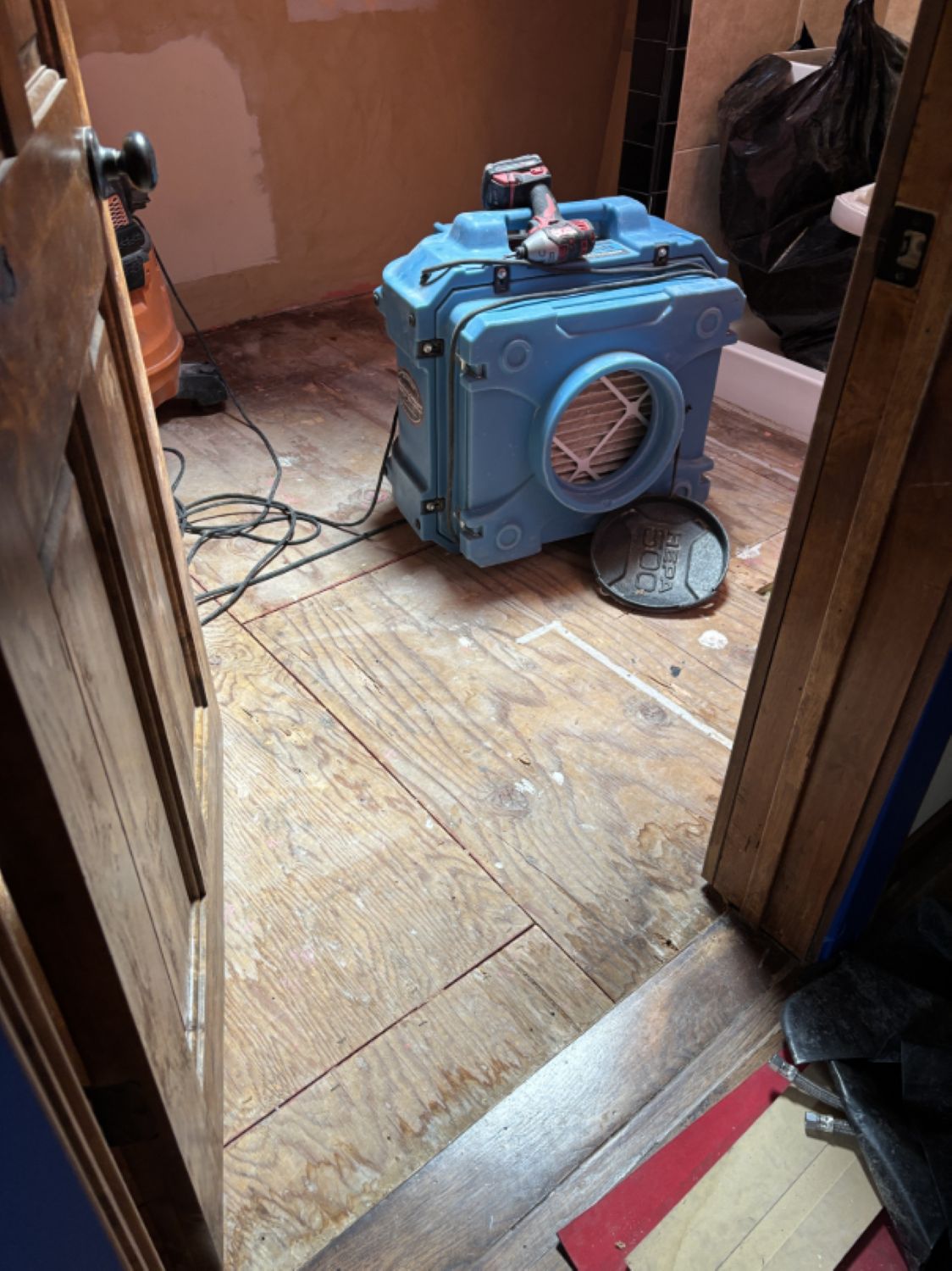
Once the tile was removed, we tore out 25 SF of wet drywall and the insulation behind it. The stud walls and subfloor got a thorough cleaning across more than 156 SF of surface area. Containment barriers with a peel-and-seal zipper kept the work zone isolated from the rest of the home.
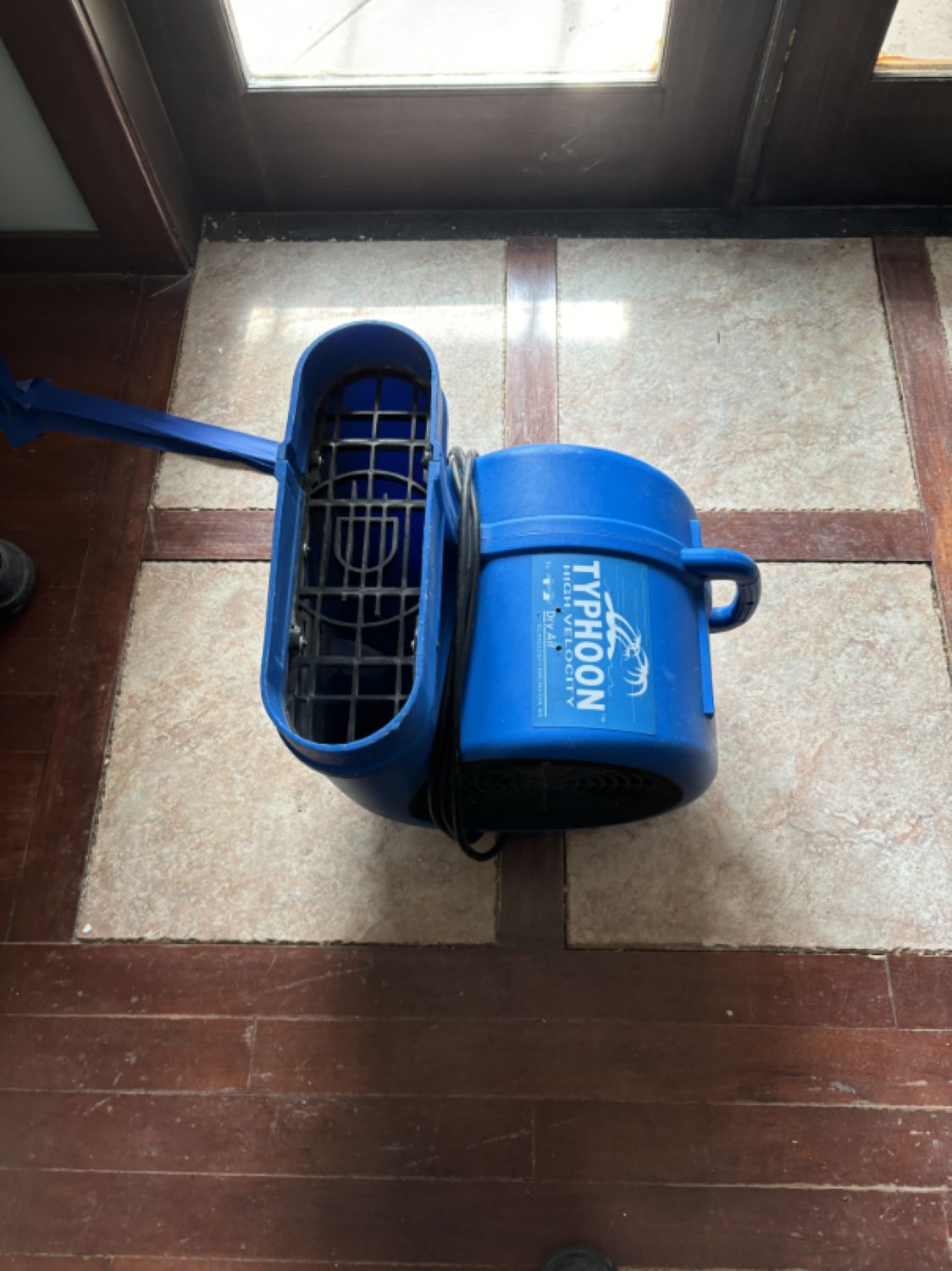
A dehumidifier ran for 14 straight days. Two axial air movers kept air circulating, one running the full 14-day stretch and the other supporting the initial stabilization phase. Our crew checked in every few days to monitor moisture levels and adjust equipment as needed.
 |
 |
 |
Main Level Dining Room: Protecting the Hardwood
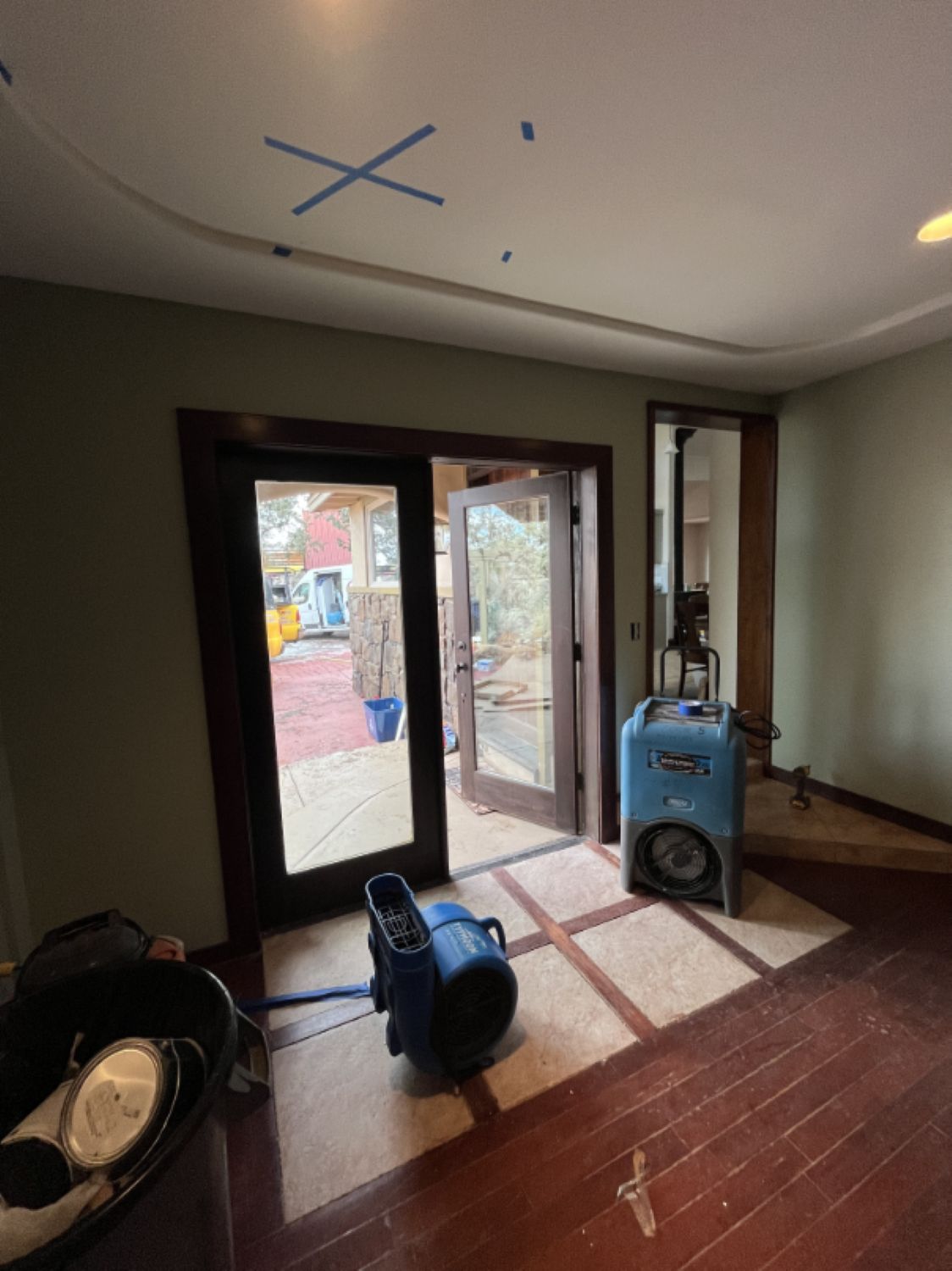
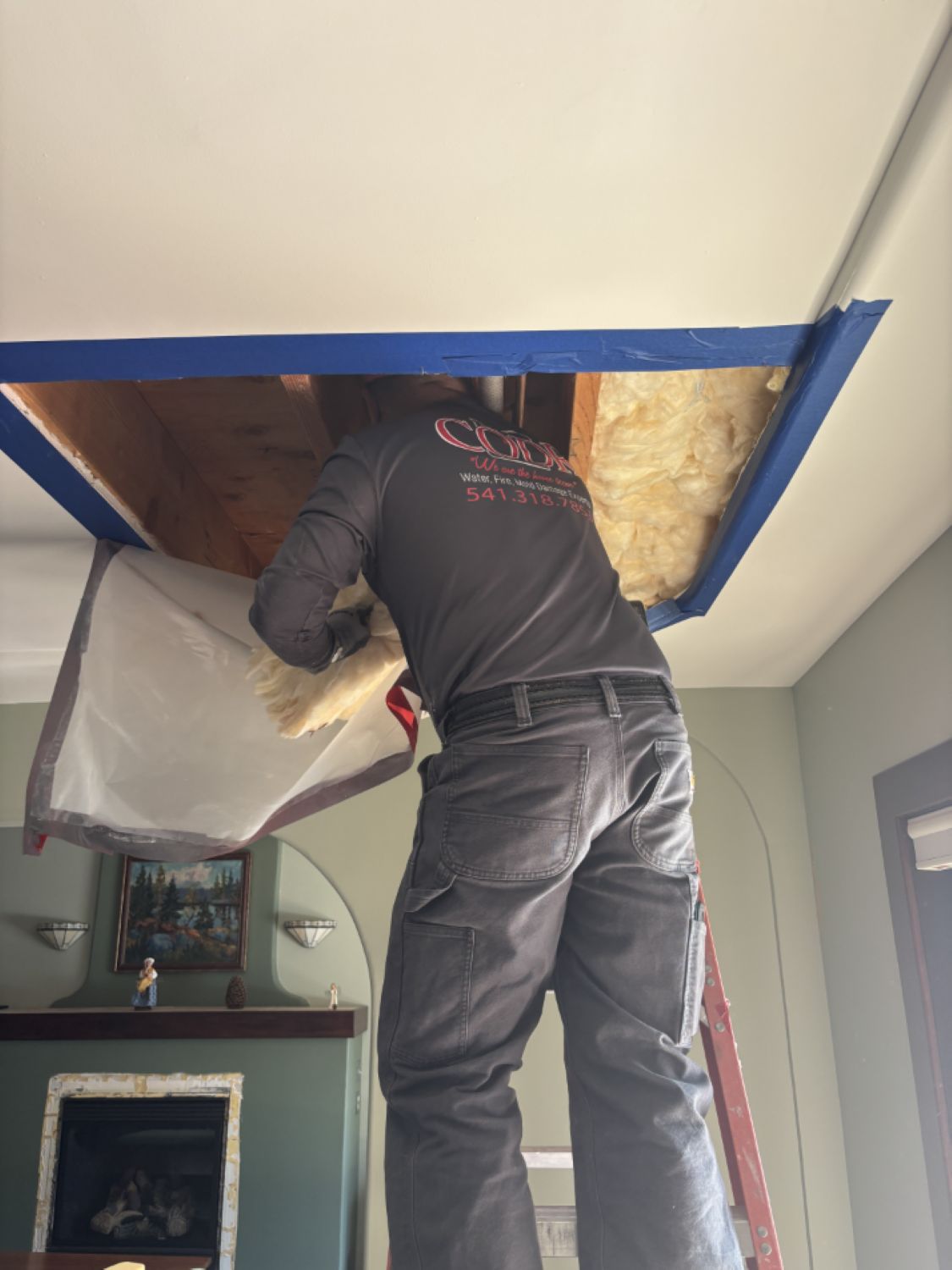
Downstairs, the priority was saving the hardwood floors while addressing the ceiling damage above. We removed the damaged drywall and wet insulation from the ceiling, and cleaned 70 SF of the exposed joist system.
The dining room got full containment, 340 SF of barrier with tension posts and two zipper entries, to keep dust and debris from spreading through the house. We laid down 80 SF of neoprene floor protection and wrapped furniture in heavy moving blankets.
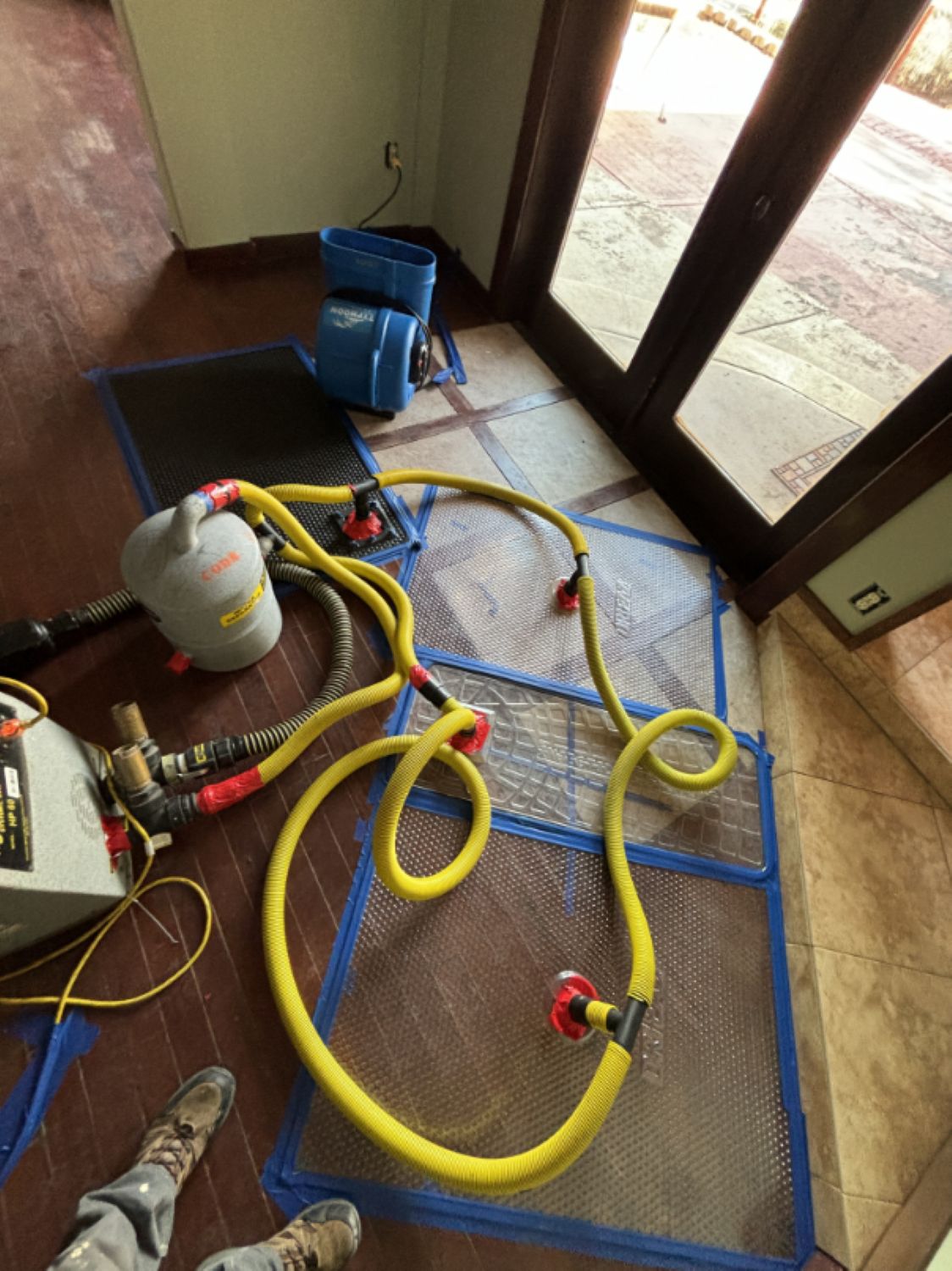
For the hardwood floors, we deployed a wood floor drying extraction mat system. These mats pull moisture straight out of the wood without hurting the finish. We’ve seen this save homeowners thousands in floor replacement costs. That system ran for four days, backed up by air movers and a dehumidifier that ran for a full week.
 |
 |
 |
 |
 |
 |
Why Roof Leaks Need Professional Restoration
It’s tempting to think a roof leak just needs a bucket and a quick wipe-down. But when water travels between floors, the damage is almost always bigger than what’s visible. Insulation holds moisture like a sponge, and subfloors swell and warp in places you can’t see. That’s why professional flood damage cleanup matters.
This project took eight monitoring visits over nearly a month. It needed specialized drying gear, full containment on two floors, and a thorough treatment protocol in the bathroom. A shop vac and a few fans from the hardware store won’t cut it.
If you’re dealing with a roof leak that’s gone beyond a simple drip, or you’ve noticed water stains on a ceiling and aren’t sure where they’re coming from, the smartest move is getting a professional assessment fast. The longer water sits, the more expensive the repair gets.
Dealing With Water Damage in Your Home?
Central Oregon Disaster Restoration responds 24/7 with on-site arrival in about 60 minutes. We handle everything from emergency water extraction through complete rebuild, all with our own in-house crews.
Serving Bend, Redmond, Sisters, Sunriver, Prineville, La Pine, Madras, and all of Central Oregon.
Contact our team for emergency help or to schedule an assessment.
Related Resources
If you’re researching water damage or want to know what to expect during restoration, these posts cover common situations our team handles across Central Oregon: