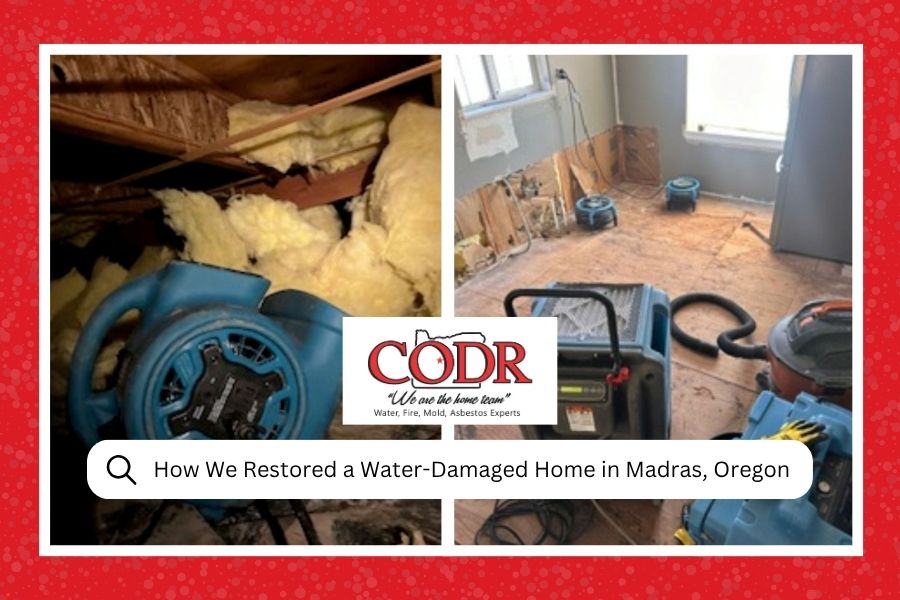
When water finds its way into a home, it doesn’t politely stop at one room. It travels. Under flooring, through walls, down into the crawlspace beneath the house. That’s exactly what happened at a Madras home we were called to help with, and by the time our team arrived, the damage had already spread further than anyone expected. Water damage restoration is what we do every day, but even routine calls like this one are a good reminder of why acting fast matters so much.
What We Found When We Got There
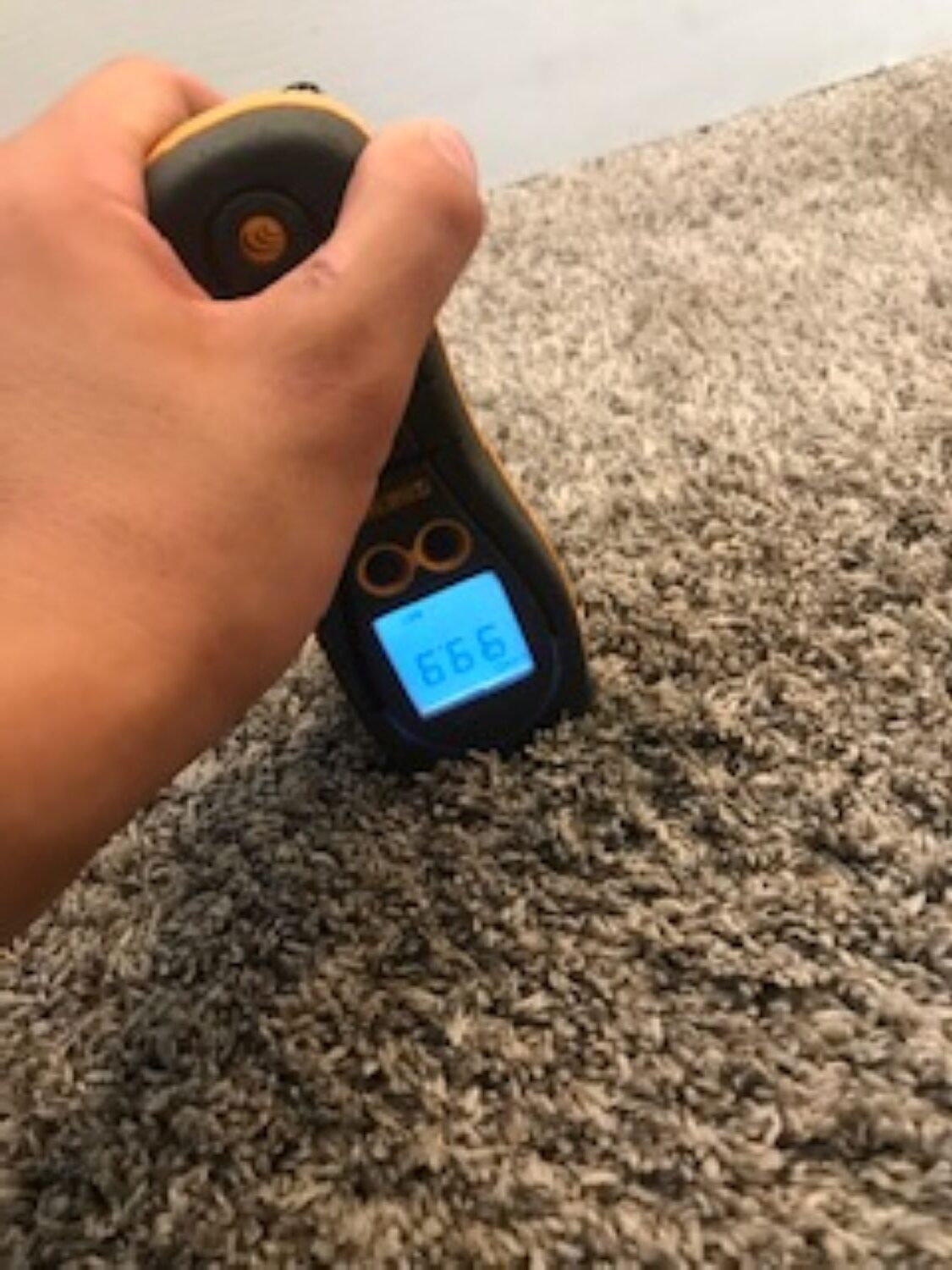
Two of our technicians were on-site the same day the call came in. We document everything before we touch anything, so the first thing the team did was walk the home and take moisture readings throughout. What they found made the scope clear pretty quickly.
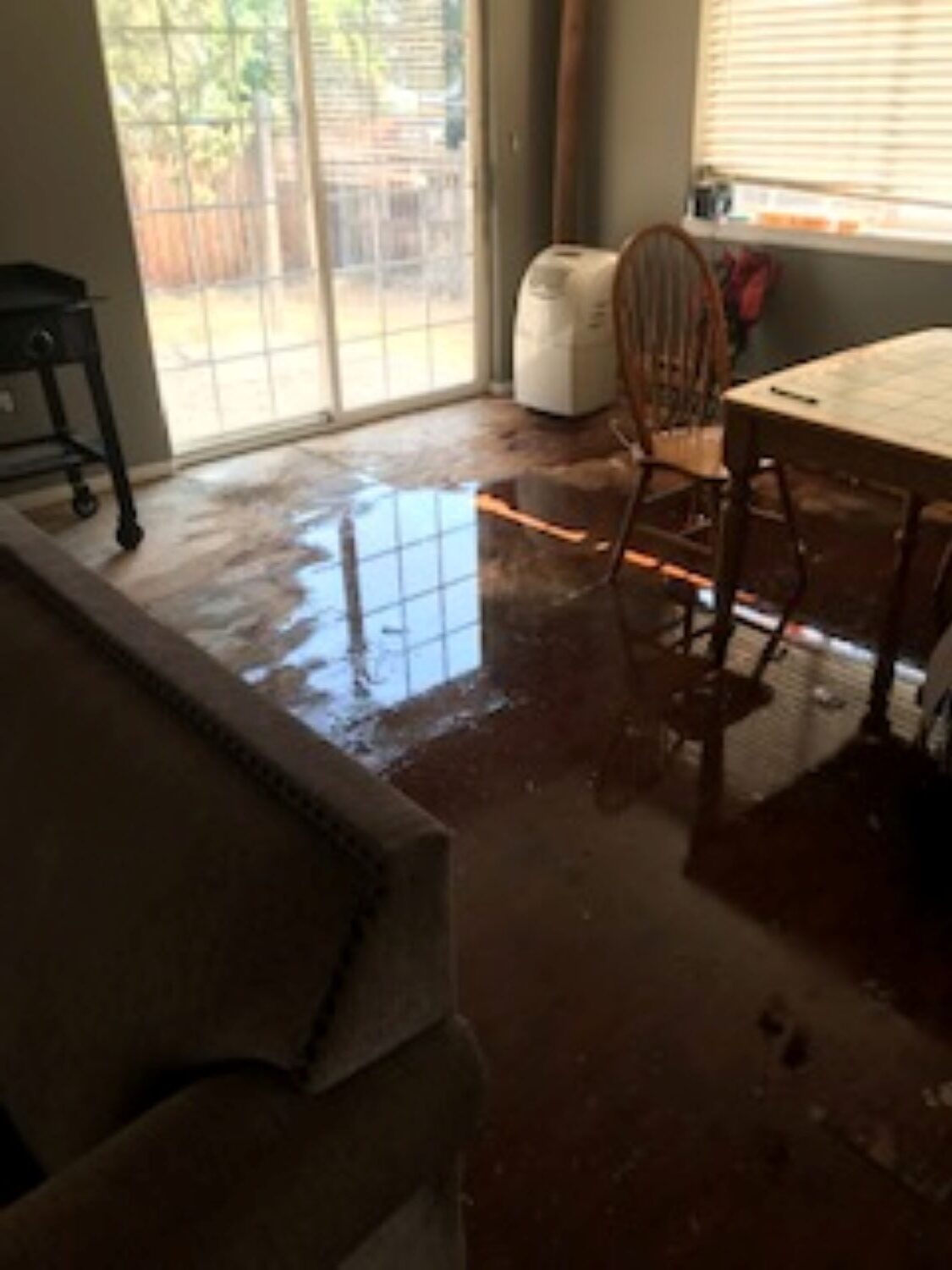
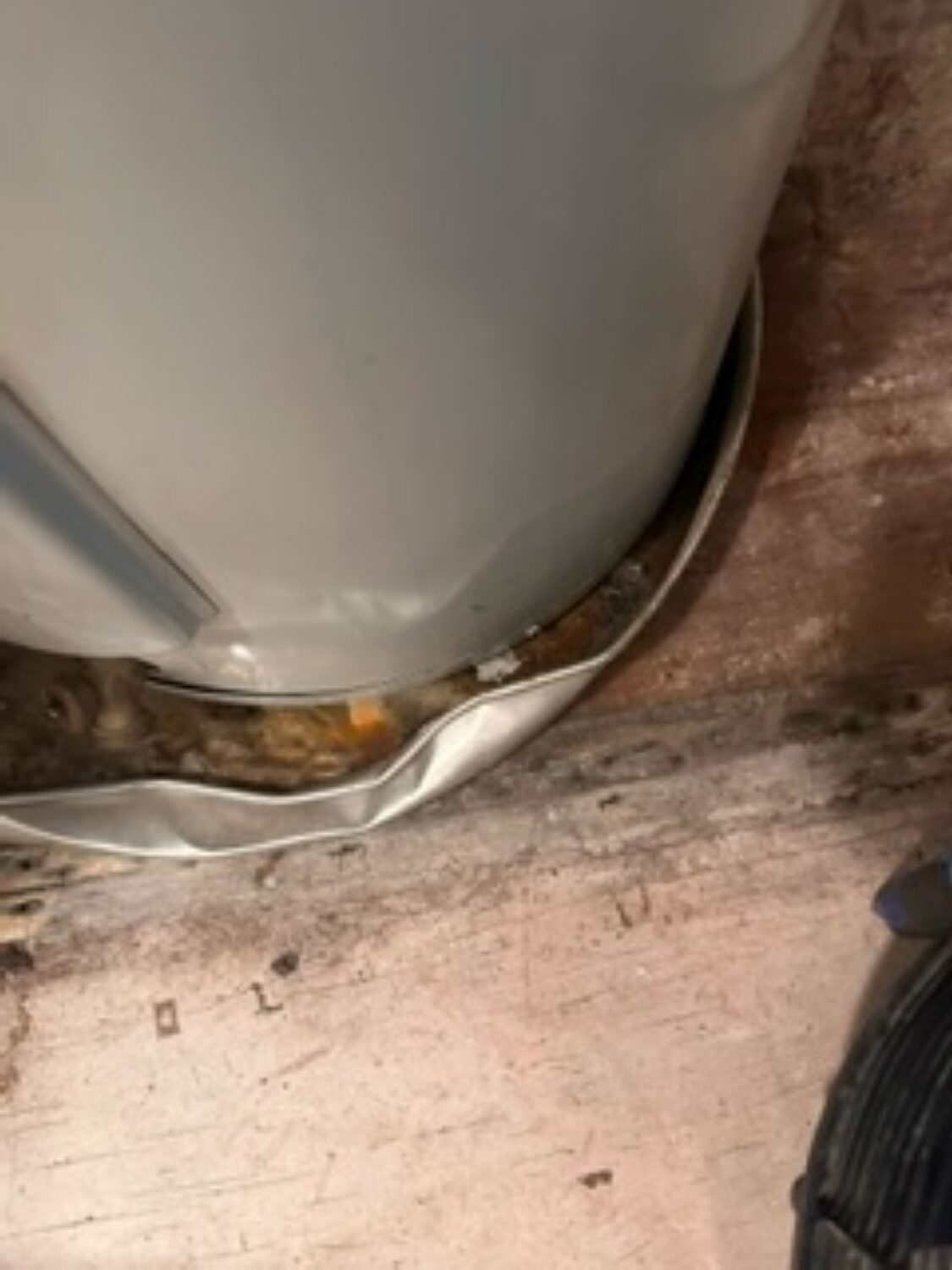
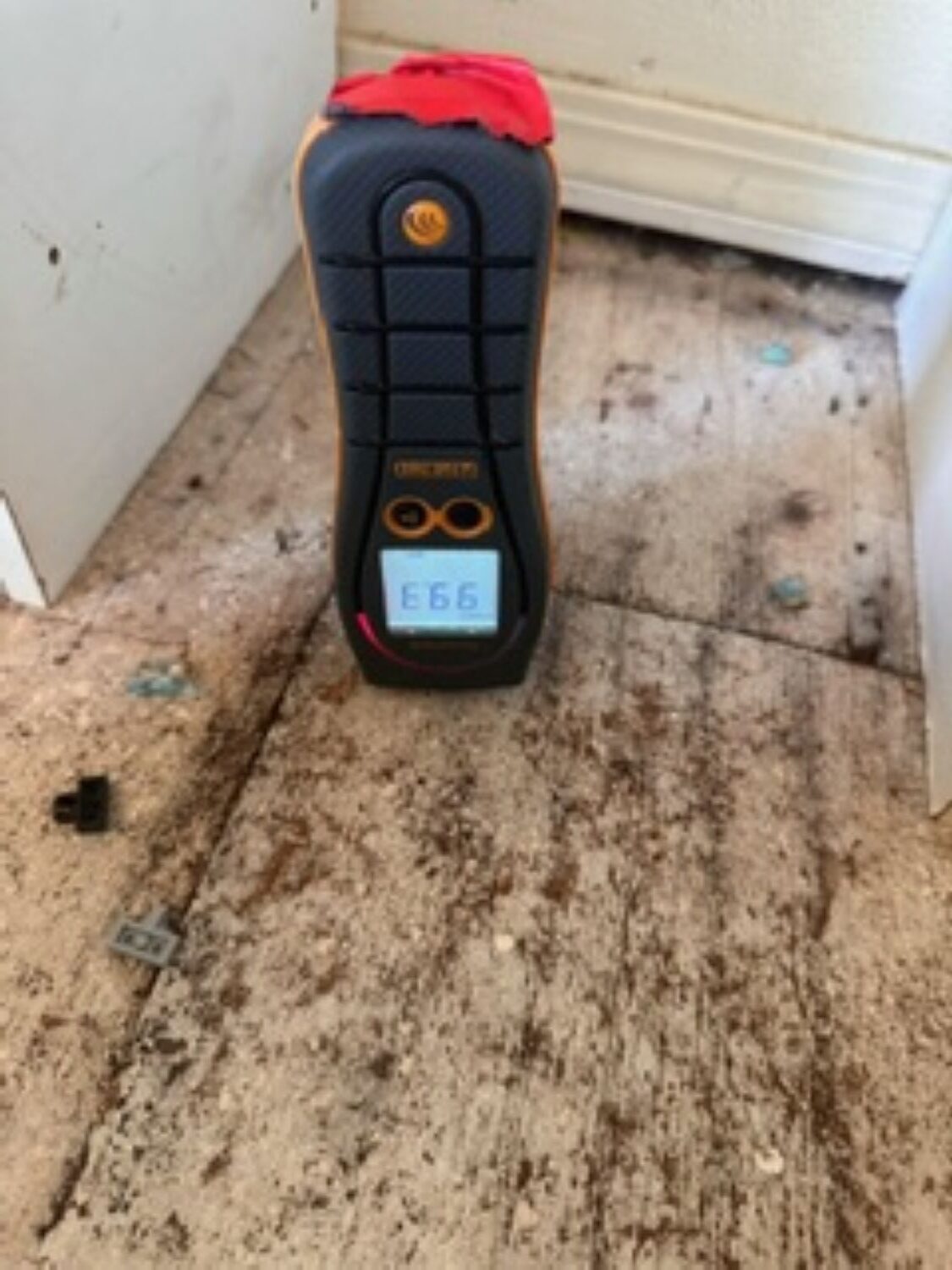
The main living areas of the home, including the kitchen, dining room, living room, entry, hallway, bedroom, and utility room, all had moisture in the flooring. The kitchen was hit hardest. Water had gotten under the cabinets, soaked into the drywall, and worked its way through the subfloor. Down below, the crawlspace had standing water and fully saturated insulation.
Here’s a look at what we documented during our initial inspection.
 |
 |
 |
Starting with the Crawlspace
Crawlspace damage often gets overlooked, but it’s one of the most important things to address early. A wet crawlspace creates the perfect conditions for mold growth, and mold doesn’t need much time to establish. Our team suited up in full protective gear and got to work.
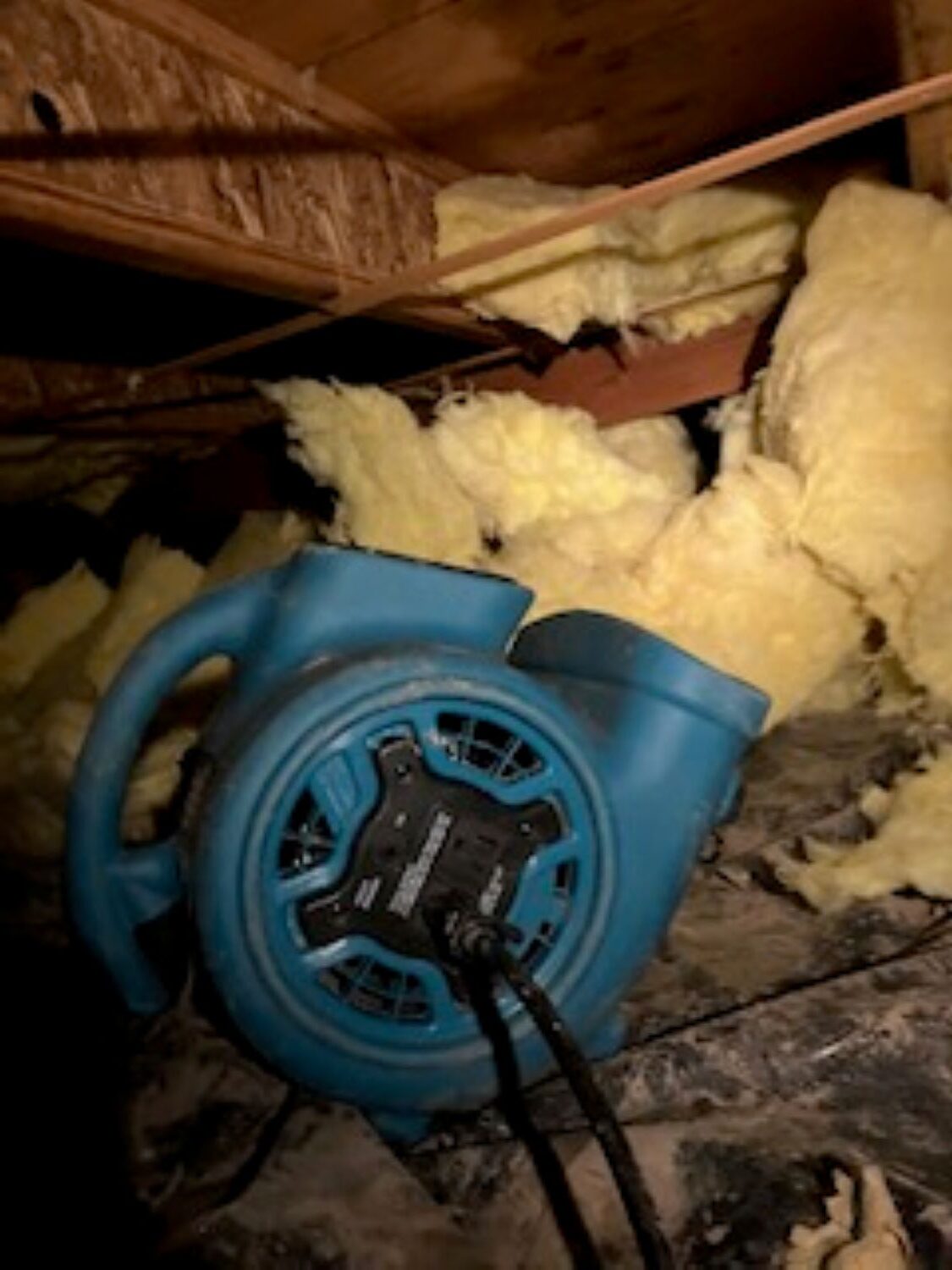
First, the standing water was pumped out. Then all the saturated insulation was removed and bagged for disposal. The team cleaned the entire joist system from top to bottom and applied a plant-based antimicrobial treatment to every surface in the space. This isn’t a step we skip. The EPA recommends treating affected surfaces with antimicrobial solutions to prevent mold from taking hold after water intrusion, and it’s standard practice for our team on every water job.
Dehumidifiers and air movers were set up in the crawlspace and monitored across multiple visits over several weeks. Every piece of equipment that went into that space was decontaminated before removal.
Tackling the Kitchen
The kitchen was where most of the visible damage was concentrated, and it required the most hands-on work. Water had soaked into the lower cabinets, the underlayment beneath the flooring, the surrounding drywall, and insulation in the walls.
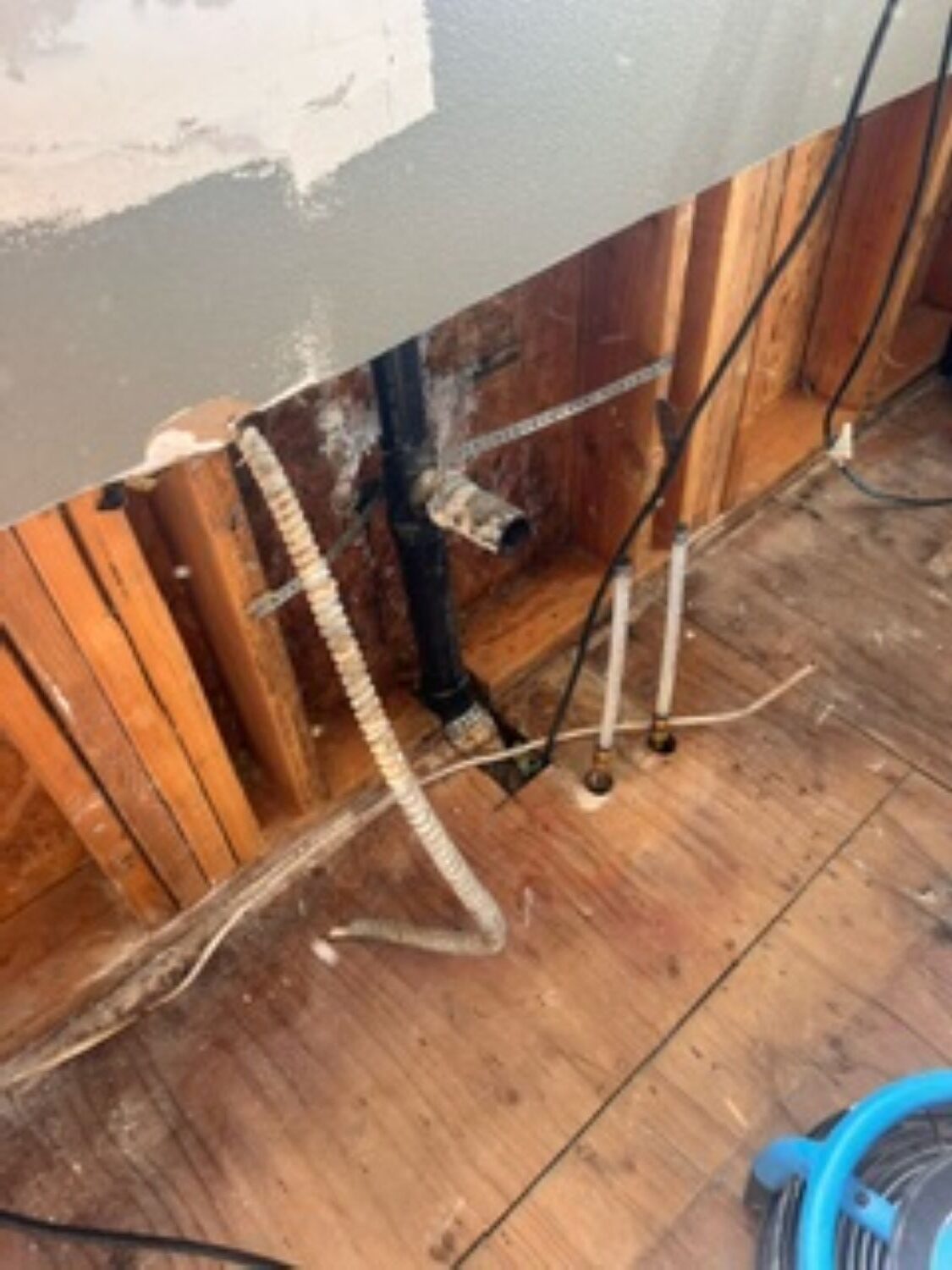
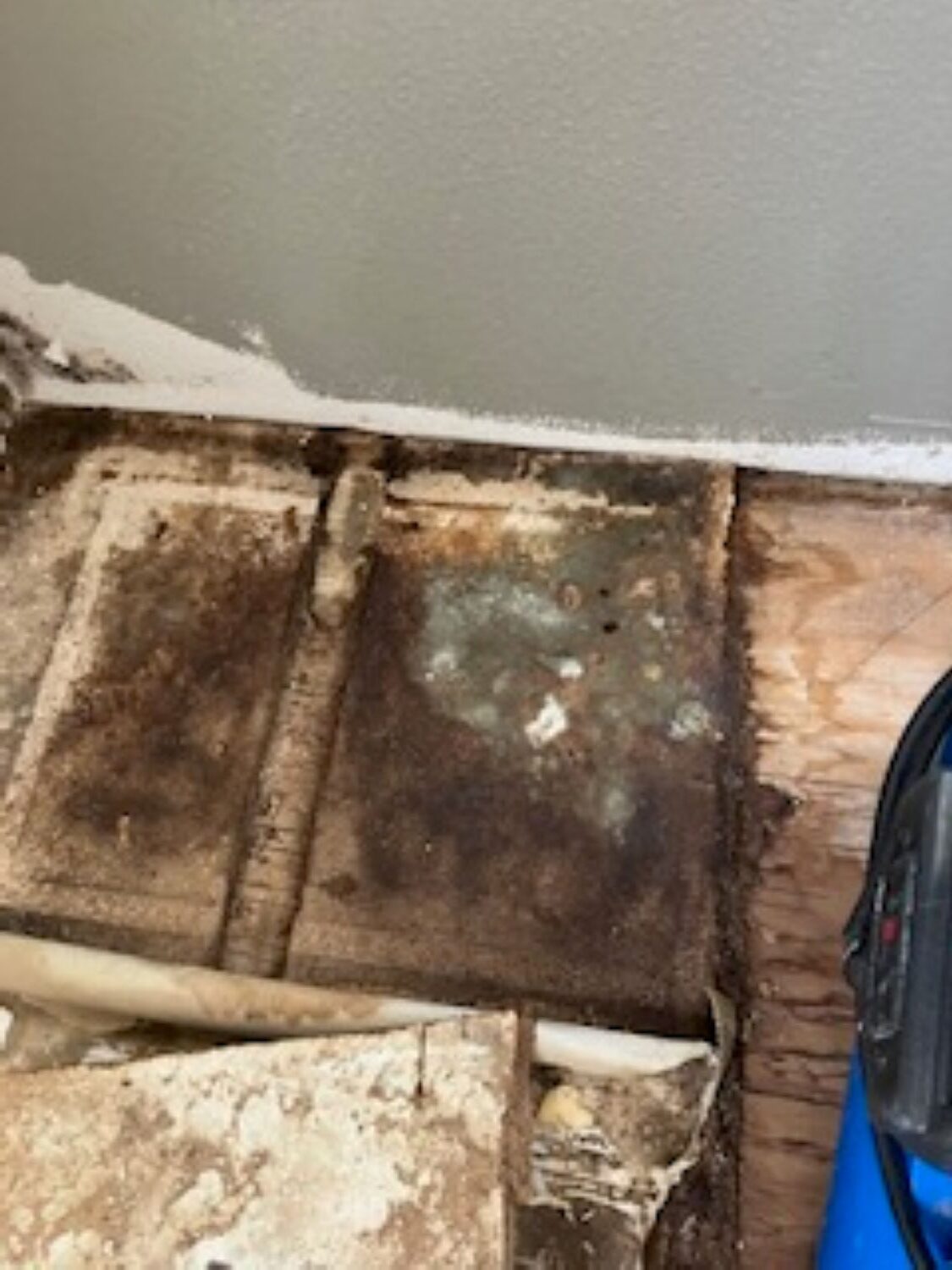
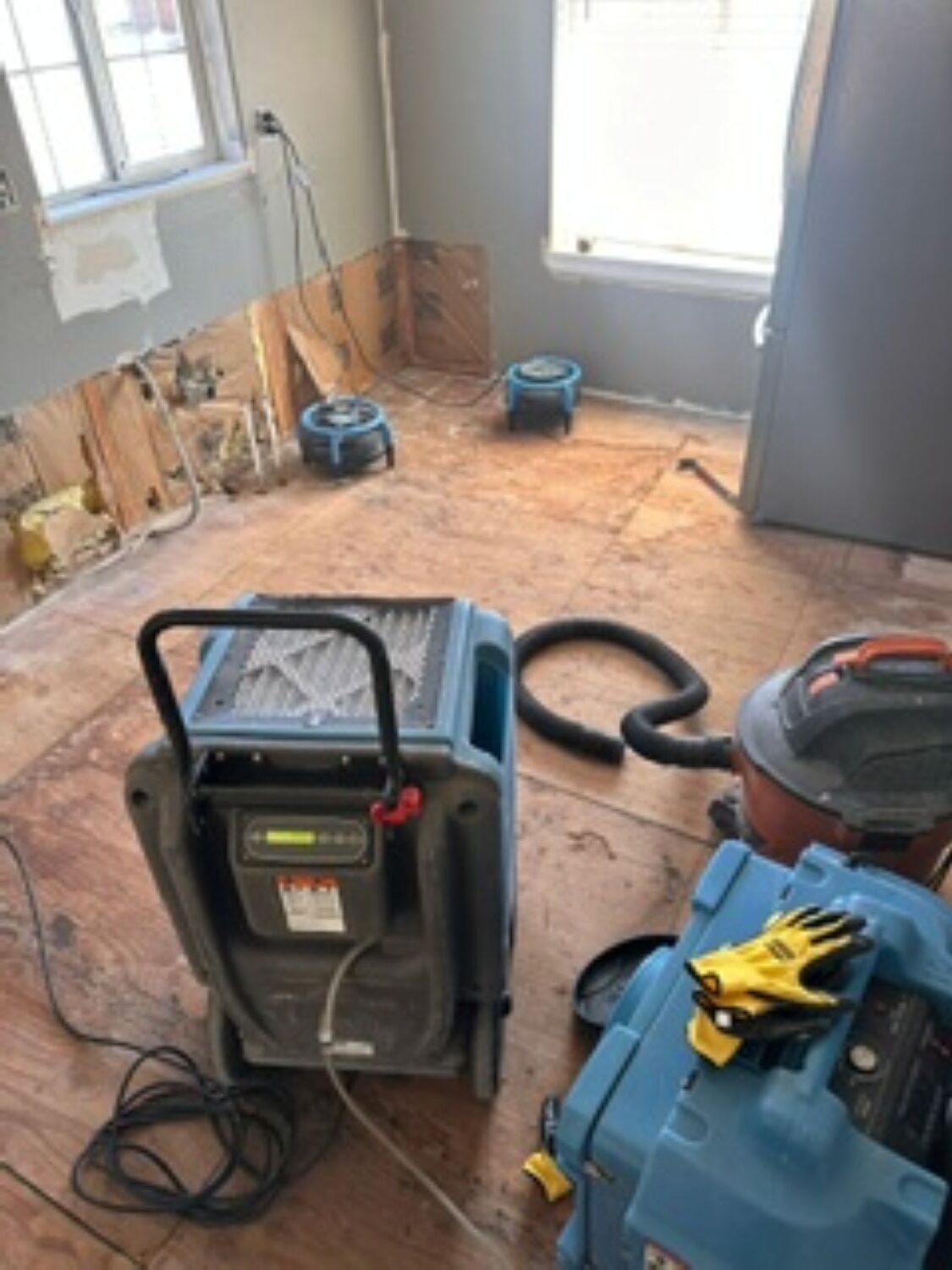
Our crew carefully removed and set aside the refrigerator and lower cabinets. Anything that couldn’t be dried and saved, including wet drywall, soaked insulation, toe kicks, and flooring underlayment, was torn out and bagged. The subfloor and exposed wall framing were cleaned and treated with antimicrobial solution. We also ran a large air scrubber with a HEPA filter throughout the demo phase to keep airborne particles from spreading through the home.
It’s worth noting why we’re particular about this step. IICRC S500 standards for water damage restoration emphasize removing all unsalvageable materials before drying begins. Trying to dry materials that are beyond saving doesn’t work. It just traps moisture longer and makes conditions worse.
Here’s what the kitchen looked like during the demo process.
 |
 |
 |
Bedroom, Living Spaces, and the Rooms in Between
Water doesn’t respect walls. The moisture had traveled from the kitchen and crawlspace into the bedroom, dining room, living room, entry, hallway, and utility room. Each of these areas needed attention.
The Bedroom Carpet
The bedroom carpet was wet when we arrived. We always try to save carpet when we can, so the team lifted it and attempted to dry it in place. Unfortunately it wasn’t salvageable, and we removed the carpet, padding, and tack strips. The subfloor was cleaned, treated, and set up for drying.
The Rest of the Main Level
The remaining affected rooms had water on hard surface floors. The process in each one was the same: extract the standing water, clean the subfloor, apply antimicrobial treatment, and place drying equipment where moisture readings called for it. Simple in concept, but it takes time and multiple return visits to do it right.
If you’ve ever dealt with a similar situation, you might find this useful: how to spot hidden water damage in your home before it spreads.
Why Monitoring Matters as Much as the Initial Response
We came back. Multiple times. That’s not unusual for a job this size.
Our team returned for moisture checks throughout the drying period, adjusting equipment as needed based on readings. Drying a home isn’t a one-visit job. Moisture migrates, materials dry at different rates, and what looks dry on the surface isn’t always dry underneath. Our team stayed on this job until the numbers confirmed everything was truly dry.
A mitigation estimator also conducted a final quality check before the job was officially closed out. That step matters because it gives us a chance to catch anything that might have been missed during the active drying phase.
Want to understand more about how the full process works? Take a look at our write-up on how quickly water damage leads to mold growth, and why the timeline matters.
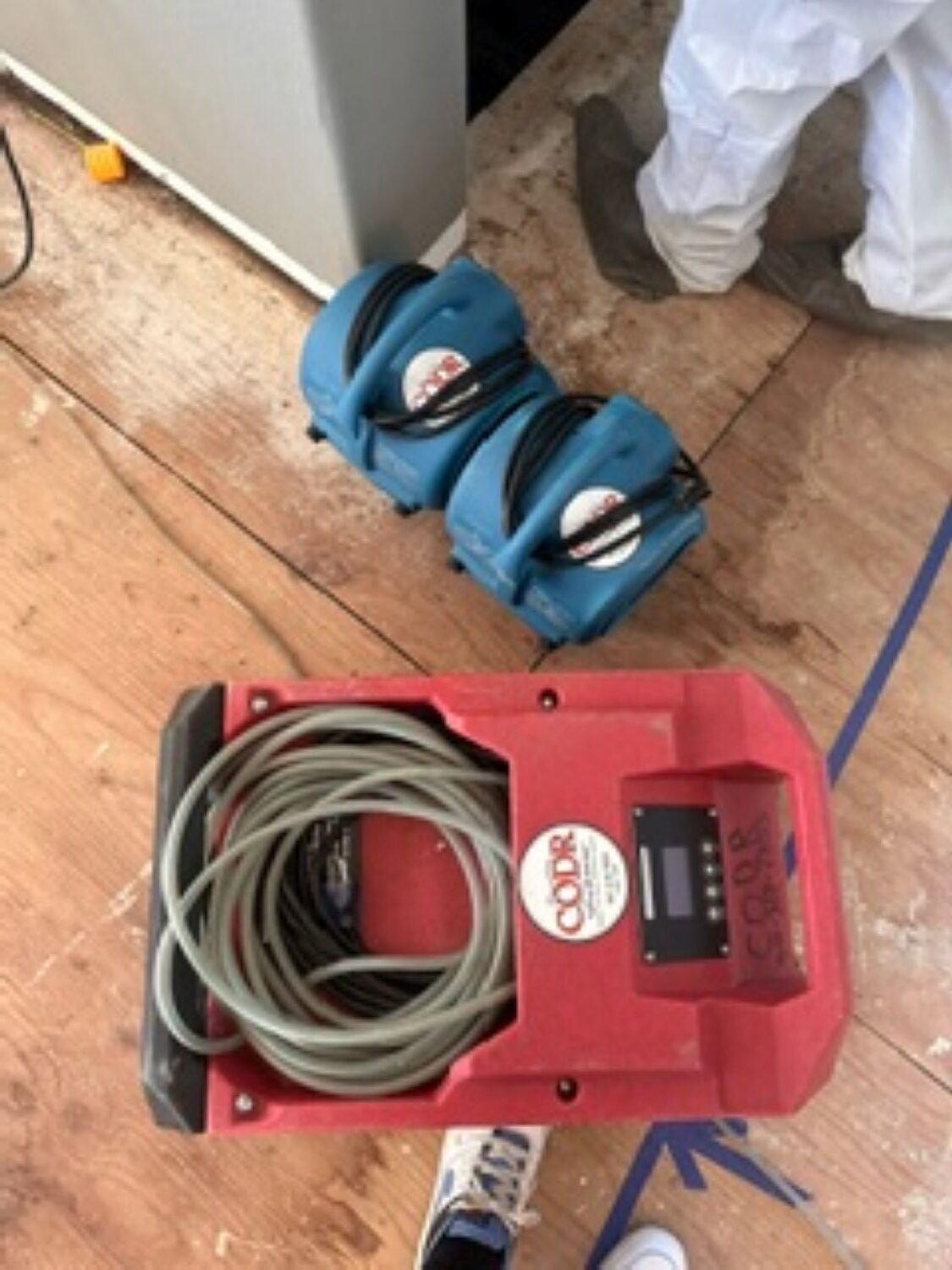
Here’s a look at the crawlspace work and additional drying photos from this job.
 |
 |
 |
Water Damage in Madras Homes: What Makes It Different
Crawlspace water intrusion is something Central Oregon homes deal with more than people realize. Most homes in this region are built on crawlspace foundations, which means moisture underneath the house is a common source of problems. When water gets in from above and below at the same time, the damage can be more extensive than it first appears.
For homeowners in Madras and across Jefferson County, getting a fast response matters. Our team covers the full Central Oregon region, and flood damage cleanup and crawlspace water intrusion are jobs we handle regularly. We’re on-site within 60 minutes for emergency calls, 24 hours a day.
If you’ve had a burst pipe, appliance leak, or unexpected water in your home, don’t wait. Read about dealing with frozen pipes in Central Oregon, one of the most common causes of the type of damage we saw on this job.
Dealing with Water Damage in Central Oregon?
Whether it’s a crawlspace full of water, a flooded kitchen, or moisture you can’t quite explain, our team is ready to help. Central Oregon Disaster Restoration has been serving Madras, Bend, Redmond, and communities across Central Oregon since 2006. We’re available 24/7 and on-site within 60 minutes for emergencies.
- 24/7 emergency response
- On-site within 60 minutes
- Full in-house mitigation and rebuild
- Direct insurance claim support
- Locally and family owned since 2006
Frequently Asked Questions
How fast does water damage spread through a home?
Water moves fast. Within the first hour it can soak into flooring, walls, and subfloor materials. Within 24 to 48 hours, mold can begin to develop. The sooner mitigation starts, the better the outcome.
Does water damage always affect the crawlspace?
Not always, but when a leak originates near the kitchen or involves significant water volume, the crawlspace below is often affected. Moisture in the crawlspace can go unnoticed for a long time, making regular checks valuable in older Central Oregon homes.
How long does water damage mitigation take?
Most residential mitigation jobs take between one and three weeks from initial response to final dry-out, depending on the extent of the damage. Multiple monitoring visits are part of the process to ensure everything dries properly.
Will my homeowner’s insurance cover water damage mitigation?
Coverage depends on your policy and the source of the damage. Our team works directly with insurance adjusters on your behalf to help navigate the claims process, so you don’t have to figure it out on your own.