
Jump To
A pipe just let go, and water is spreading fast. Here’s what matters most right now: stop the water, cut the power, document the damage, and call a professional water damage restoration team immediately. Those first 60 minutes are the most important ones. Our crew at Central Oregon Disaster Restoration has responded to burst pipe calls across Bend, Redmond, Sisters, and Central Oregon since 2006, and we know how much difference fast action makes.
Step 1: Shut Off the Water
Get to your main water shut-off valve and turn it clockwise. In most Central Oregon homes, it’s near the water heater, in a utility closet, or inside the crawl space. If you can’t locate it quickly, use individual fixture shut-off valves near the source. Toilets have a small valve at the wall behind them. Sinks have valves in the cabinet underneath. Use those as a stopgap, then get the main off.
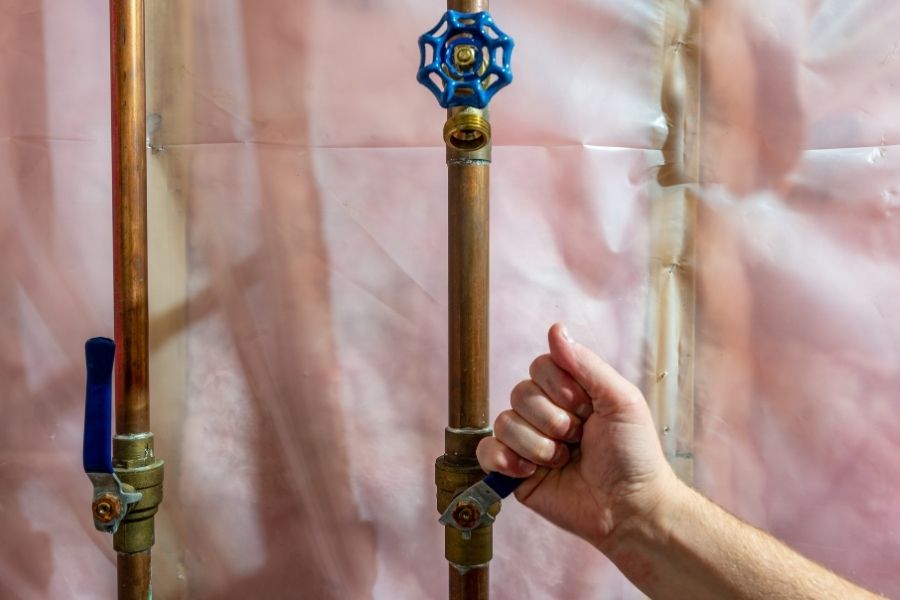
Knowing where your main shut-off valve is before a pipe bursts can save you thousands. In most Central Oregon homes, it’s in a utility closet, near the water heater, or in the crawl space.
Once the water is off, open a faucet on a lower floor to drain pressure from the line. This reduces ongoing leakage from the burst section while you move through the next steps.
Step 2: Cut the Power to Affected Areas
Water and electricity do not mix. Head to your breaker box and cut power to any zones where water is present or nearby before you step into the room. If water is already pooled near the panel and you can’t reach it safely, stay out and call for help first. This step feels like a distraction when you’re watching your home flood, but it’s not optional.
Step 3: Photograph the Damage Before You Touch Anything
Before moving furniture or grabbing towels, take photos and video of everything: the burst pipe, wet floors, ceilings, walls, and damaged belongings. Document it all in place. Thorough documentation supports homeowner claims and reduces processing delays. A few minutes with your phone now can save weeks of back-and-forth with your insurer later.
First-Hour Burst Pipe Checklist
- Shut off the main water supply. Use fixture valves if the main is hard to reach.
- Cut power to any affected zones at the breaker box.
- Document everything with photos and video before moving anything.
- Call your insurance company to open a claim as soon as possible.
- Move valuables and furniture out of water’s path if the area is safe to enter.
- Call a professional restoration team right away.
Step 4: What NOT to Do After a Pipe Bursts
A few well-intentioned moves can make a manageable situation significantly worse. Avoid all of these:
- Don’t run ceiling fans or turn on HVAC to “dry things out.” Circulating air through wet drywall spreads moisture to unaffected areas and creates ideal conditions for mold.
- Don’t use a household wet/dry vac on large amounts of water. These units aren’t built for serious extraction and can fail or create a hazard.
- Don’t start tearing out wet drywall or flooring yourself. In older Central Oregon homes, disturbing wet materials without testing can expose asbestos or lead, which require licensed handling.
- Don’t ignore wet insulation, subfloor, or ceiling material. These hold moisture long after surfaces look dry. That’s exactly where mold takes hold. Our post on how fast water damage leads to mold growth explains what’s at stake if wet materials are left untreated.
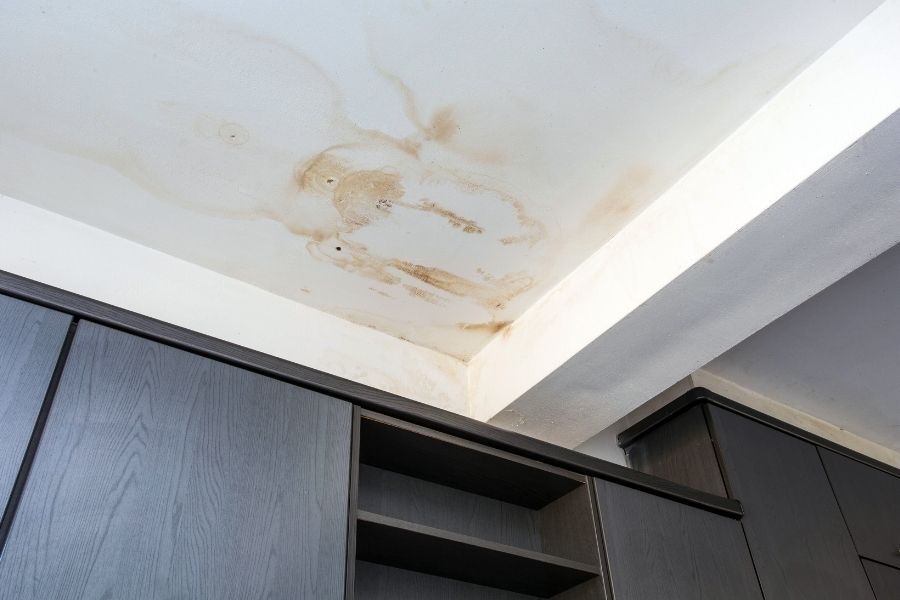
Ceiling stains like these are a sign of moisture that’s been sitting longer than it should. By the time you can see it, the damage is already working through the structure above.
Step 5: Move Belongings Out of the Water’s Path
Once the area is safe to enter, move rugs, furniture, and personal items away from standing water. Rugs left on hardwood floors cause staining and warping. Furniture absorbs moisture upward through legs and fabric. Elevate what you can’t move using wood blocks or foil, and get valuables to a dry area. Focus on what will be damaged quickly, and let the professionals handle the structural drying.
Step 6: Call a Professional Water Damage Restoration Team
This step has the most direct impact on your final repair bill. Professional crews bring industrial extraction equipment, commercial dehumidifiers, and moisture meters that detect hidden moisture inside walls and under floors. None of that is replicable with household tools.
Our team at Central Oregon Disaster Restoration is IICRC certified for water damage restoration and typically on-site within 60 minutes, whether you’re in Bend, Redmond, Sunriver, Prineville, La Pine, or Madras. We handle the insurance coordination so you’re not managing paperwork while your home is still wet. For a real-world example of how fast response limits damage, read our case study on multi-floor water damage at a Redmond hotel.
Why the First Hour Matters More Than You Think
| Time After Burst | What’s Happening |
|---|---|
| 0 to 30 minutes | Water saturates drywall and flooring. Furniture begins absorbing moisture. |
| 1 to 2 hours | Drywall weakens and warps. Moisture spreads through wall cavities and subfloor. |
| 24 to 48 hours | The EPA notes mold can begin growing on wet surfaces within this window. |
| 1 week+ | Structural damage deepens. Mold establishes. Remediation scope and costs increase significantly. |
In Central Oregon, burst pipes are especially common from December through February when temperatures drop hard. A pipe that freezes and bursts inside a wall cavity can go unnoticed for hours if you’re not home. Read our guide on dealing with frozen pipes in Central Oregon to reduce your risk heading into the next cold stretch.
Frequently Asked Questions
Should I call my insurance company before calling a restoration team?
You can call both at the same time. Most homeowners find it helpful to reach out to restoration first, since stopping damage is the priority and professional documentation strengthens your claim. Our team at Central Oregon Disaster Restoration works directly with insurance adjusters and can help you through the process from the start.
What if I can’t find my main water shut-off valve?
Use individual fixture valves near the source as a first step. Toilets and sinks both have shut-off valves at the wall or under the cabinet. Your local utility can also shut off supply at the street meter. We strongly recommend locating and labeling your main valve now, before an emergency happens.
How can I tell if there’s hidden water damage inside my walls?
Watch for soft or discolored drywall, a musty smell, or paint that’s bubbling. The most reliable method is a professional moisture meter, which reads moisture levels inside wall cavities without opening them up. We do this on every water damage call. Our post on spotting hidden water damage covers the warning signs in more detail.
Does a burst pipe always lead to mold if I don’t act fast?
Not always, but the window is short. Mold needs moisture, organic material, and time. With professional extraction and drying equipment deployed quickly, mold growth can be prevented even after significant water damage. Towels and box fans alone rarely dry structural materials to safe moisture levels, which is why calling a professional team as early as possible makes such a big difference.