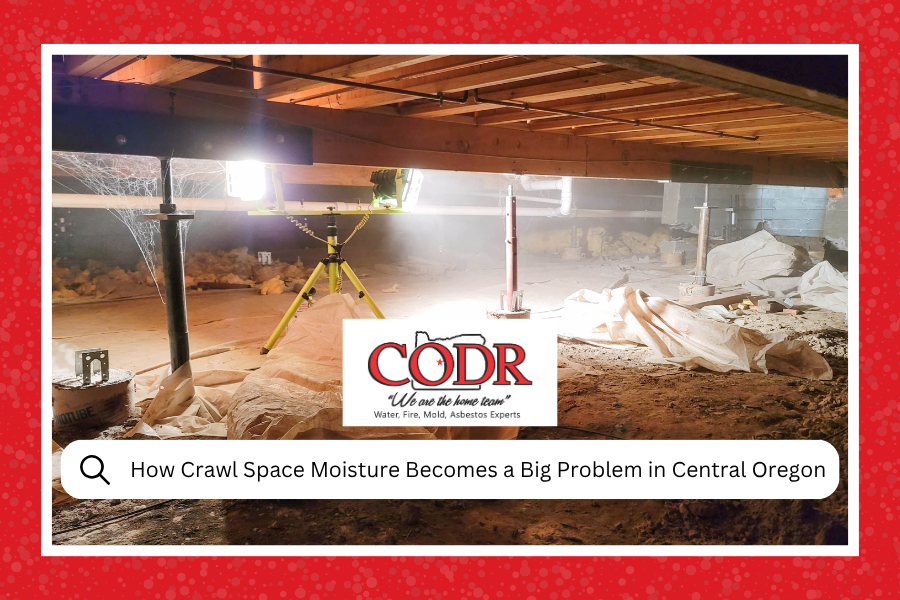
Most homeowners in Bend, Redmond, and Sisters spend zero time thinking about what’s happening under their floors. Understandable. But if your home sits over a crawl space, and most Central Oregon homes do, there’s a real chance moisture is quietly causing damage right now. Our team at Central Oregon Disaster Restoration has inspected hundreds of crawl spaces across the region, and what we find is almost never “nothing.” Water damage restoration calls often trace back directly to the crawl space.
Worried About Moisture Under Your Home?
We’re available 24/7 and on-site within 60 minutes. If water has already made it into your crawl space, our in-house crew handles everything from extraction through full structural drying.
Why Crawl Spaces Are So Common in Central Oregon
Basements are rare here. Volcanic soil, shallow water tables in certain pockets, and high-desert building traditions pushed contractors toward crawl space foundations almost universally. If your home was built before 2000, a crawl space was essentially the default.
The design makes sense on paper. It lifts the living space off the ground and gives plumbers and electricians room to work. The issue is that “some airflow” doesn’t mean “controlled airflow.” Central Oregon’s cold winters, dramatic temperature swings, and spring snowmelt create condensation cycles that keep crawl spaces damp even when it hasn’t rained in weeks. Prineville, La Pine, and Sunriver see this just as much as Bend does.
How Does Moisture Get Into a Crawl Space?
There isn’t just one answer. Moisture typically enters through several overlapping pathways, which is why a single fix often doesn’t solve the whole problem.
Common Moisture Entry Points
| Source | What’s Happening | Risk Level |
|---|---|---|
| Ground vapor | Moisture rises from bare soil continuously | High |
| Foundation vents | Warm air enters and condenses on cold surfaces | Medium-High |
| Slow plumbing leaks | Drips go unnoticed for months under the home | High |
| Poor gutter drainage | Runoff directed toward the foundation | Medium |
| Spring snowmelt | Water enters through vents and foundation cracks | Seasonal/High |
Ground vapor is the one people underestimate most. Even in summer, soil holds moisture, and that moisture rises constantly. Without adequate ground cover, you’re dealing with a slow, steady source of humidity under your floors year-round. The EPA identifies crawl space vapor as a leading contributor to structural degradation and poor indoor air quality in residential homes.
Slow plumbing leaks deserve a callout. A dripping supply line or drain fitting in a crawl space can go six months before anyone notices. By then, the floor joists have been absorbing moisture the whole time. We’ve seen this in Bend homes where the first sign was soft spots in the kitchen floor, not a puddle. If a pipe does let go all at once, our post on what to do in the first hour after a pipe bursts walks through exactly what to do.
Warning Signs You Should Not Ignore
Your home usually signals a problem before the damage becomes severe. Here’s what to look for:
- A musty or earthy smell coming from floor vents or lower rooms
- Floors that feel soft, springy, or slightly bouncy underfoot
- Wood floors that are cupping, warping, or showing gaps
- Rust on metal pipes, brackets, or fasteners under the home
- Condensation on windows during cooler months
- Increased allergy symptoms or respiratory irritation indoors
- Visible staining or wet spots on your vapor barrier
The musty smell is the one homeowners explain away most often. “It’s just an old house.” Sometimes. But that smell frequently means something is already growing on organic material down there. Don’t dismiss it, especially if you’re also noticing soft floors.
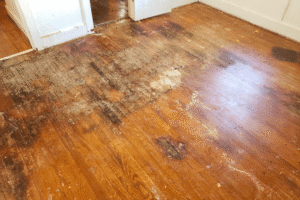
Soft, springy, or discolored floors are one of the first physical signs that moisture has been working on the structure below your home.
What It Does to Your Structure and Your Air
Structural Damage Builds Slowly
Wood and water don’t mix. Your floor joists and subfloor are carrying real loads. When they stay damp long enough, wood fiber breaks down from the inside out. You’ll feel floors acting differently before anything is visible. Left alone, it progresses to rot and structural failure. Understanding what water damage restoration actually looks like can help you know what to expect if things have already progressed.
The Stack Effect and Your Indoor Air
Here’s something that surprises most homeowners: research suggests up to 40% of indoor air in a crawl space home can originate from below the floor. That’s the stack effect. Warm air rising through the home draws air up from the crawl space through subfloor gaps and HVAC penetrations.
Whatever is in that air, you’re breathing some of it. For healthy adults, a damp crawl space is mostly a nuisance. For people with asthma or allergies, it’s a real concern. The EPA’s guide on mold and moisture covers the health picture for sensitive households.
Already Found Water Under Your Home?
Our team handles flood damage cleanup including crawl space water intrusion across Central Oregon. We’re local, fast, and our crews don’t subcontract. The people who show up are our people.
What Should You Do About Crawl Space Moisture?
The earlier you catch it, the simpler the fix. Here’s a practical approach:
1. Actually Go Look
Do a basic inspection once a year. Old clothes, flashlight, five minutes. Look for standing water, staining on the vapor barrier, rust on metal components, and any soft or discolored wood. Late spring, after snowmelt season, is the best time in Central Oregon.
2. Check the Simple Stuff First
Make sure gutters and downspouts are moving water away from the foundation. Check for any visible plumbing drips. Confirm foundation vents aren’t directing water inside. A lot of crawl space moisture issues have surprisingly fixable origins that just went unaddressed for too long.
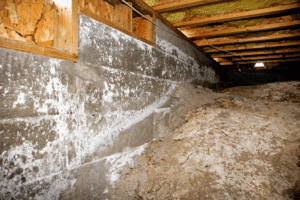
Persistent moisture in crawl spaces creates conditions where biological growth takes hold on wood framing and insulation, eventually affecting the air quality throughout the entire home.
3. Know When to Call a Professional
Standing water, soft structural wood, significant staining, or visible biological growth has moved past the DIY threshold. Structural moisture damage needs proper drying equipment, calibrated moisture meters, and someone who knows what “dry enough” actually means by industry standards. It’s also worth knowing whether your homeowners insurance covers water damage in Oregon before the bill arrives. Central Oregon Disaster Restoration has handled crawl space water intrusion throughout Bend, Redmond, Sisters, Sunriver, La Pine, Madras, and Prineville since 2006. Our IICRC-certified water damage technicians bring the right tools, and our in-house crews do the work start to finish.
Frequently Asked Questions
How do I know if my crawl space has a moisture problem without seeing standing water?
The most common early sign is a musty smell near floor vents. Other clues include floors that feel soft or springy, wood floors cupping or warping, and condensation on windows. A basic flashlight inspection once a year in late spring is the most reliable way to catch problems early.
Does Central Oregon’s climate make crawl space moisture worse?
Yes. Cold winters, significant snowpack, spring snowmelt, and dramatic temperature swings create condensation cycles that drive moisture into crawl spaces even without heavy rain. The widespread use of crawl space foundations across Bend, Redmond, Prineville, and La Pine means more local homes carry this risk than areas where basements are common.
Can a damp crawl space affect the air quality upstairs?
Yes. The stack effect draws air upward from the crawl space into living areas through subfloor gaps and HVAC penetrations. A significant share of indoor air in crawl space homes can originate from below. This matters most for households with members who have asthma or allergies.
I have a vapor barrier installed. Why do I still have a moisture problem?
A vapor barrier slows ground vapor but doesn’t stop moisture entering through foundation vents, plumbing leaks, or snowmelt intrusion. Barriers also degrade over time. If yours is more than 10 to 15 years old, or wasn’t sealed properly at installation, it may not be doing what you think it is.